

Dr. Segun Adebayo calls for indigenous education and research reforms across Africa
Education
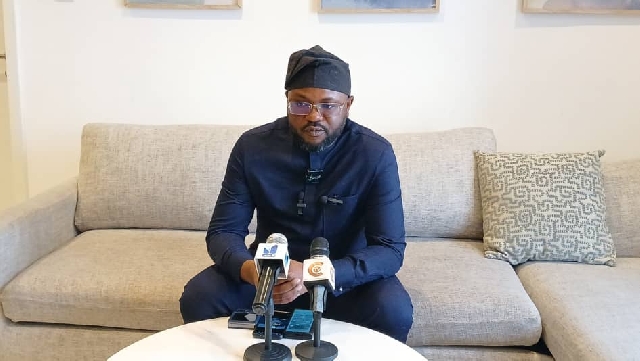 Dr. Segun Adebayo
Dr. Segun Adebayo, Executive Director of the Centre for African Policy Research and Advisory, has raised concerns about what he describes as Africa’s continued dependence on Western models of education, science, and research, urging governments and institutions to prioritise home-grown solutions to the continent’s development challenges.
Speaking during a media engagement, Dr. Adebayo questioned the widespread adoption of Western curricula in African schools, arguing that the system often prepares students for opportunities abroad rather than equipping them to address local needs.
According to him, this approach has contributed to persistent brain drain and weakened Africa’s capacity to build strong indigenous research ecosystems.
“Our education and research systems must reflect our realities and solve our problems,” he said, stressing that Africa cannot rely indefinitely on imported knowledge and technologies.
Dr. Adebayo also expressed concern about what he described as limited investment in local scientific innovation, noting that many African institutions depend heavily on external research frameworks.
He warned that such reliance hampers the continent’s ability to independently assess technologies introduced into its markets.
Citing examples from the agricultural sector, he called for more rigorous risk assessments of Genetically Modified Organisms (GMOs) and agrochemicals before adoption.
He referenced ongoing global debates around chemicals such as glyphosate and atrazine, which have faced scrutiny in some countries over potential environmental and health impacts.
He further criticised policies such as the Plant Variety Protection Act, arguing that some regulatory frameworks tend to favour multinational seed companies over smallholder farmers, potentially undermining traditional farming practices and seed sovereignty.
Dr. Adebayo emphasised that African countries must strengthen their own research institutions and encourage critical thinking among students and policymakers to ensure that imported technologies and policies are adapted to local contexts.
He urged African leaders, scientists, and academic institutions to invest in indigenous knowledge systems, protect farmers and consumers, and develop context-specific solutions tailored to the continent’s social, economic, and environmental realities.
“The future of Africa depends on our ability to take ownership of our education, science, and development,” he said.
Source: Classfmonline.com/Edem Afanou


Trending News
Afenyo-Markin raises concern over rising youth unemployment
13:48
President Mahama ranked 5th on devex power 50 for Global development leadership
16:02
President Mahama champions new framework for African security at Accra conference
16:34
African security leaders meet in Accra to forge new framework for regional cooperation
12:22
Bryan Acheampong emerges frontrunner in NPP flagbearer race ahead of 2026 primary – Independent Poll
14:24
Nanumba Traditional Council strengthens ties with National Petroleum Authority
18:14
Traditional medicine practice council (TMPC) shuts Nana Boakye herbal centre, sanctions others.
09:43
Supreme Court throws out OSP application to join case challenging Its legality
12:28
Aftermath of NPP primary: Afenyo-Markin to remain Parliamentary leader-Razak Kojo Opoku to critics
13:28
GPRTU taskforce arrests 17 drivers in Amasaman over unapproved transport fares
15:55