
Ghana Medical Trust Fund assesses regional hospitals ahead of April rollout
Health News
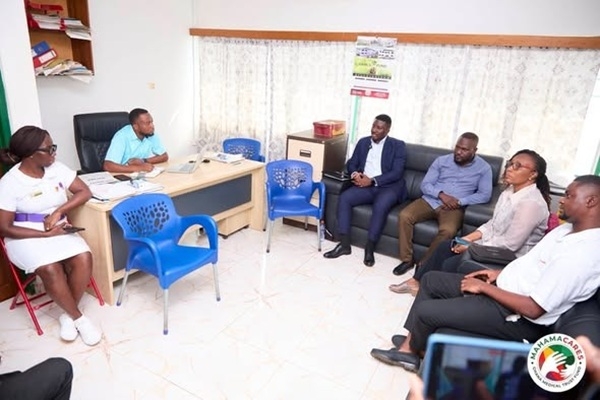 Mahamacares team in Western North
The Ghana Medical Trust Fund (GMTF) has begun a nationwide assessment of designated regional hospitals in the country’s newly created regions as part of preparations for its official operational rollout in April.
The exercise is aimed at evaluating the readiness of health facilities and identifying service delivery gaps in the management of chronic Non-Communicable Diseases (NCDs), in line with the Fund’s mandate to improve access to specialised and life-saving care.
So far, the Trust Fund has completed similar engagements with all Teaching Hospitals and Regional Hospitals across the country, with facilities in the newly created regions now the focus of attention.
On Monday morning, a team led by the Health Policy Advisor of the Fund, Dr Norbert Kipo, visited the Sefwi Wiawso Government Hospital in the Western North Region to assess first-hand the challenges confronting healthcare providers and patients, particularly in the treatment of chronic illnesses.
Officials say the visits are intended to gather critical data on infrastructure, equipment, and care capacity to ensure the smooth implementation of the Fund’s interventions when operations fully commence.
The Ghana Medical Trust Fund reaffirmed its commitment to equitable healthcare delivery, stressing that no patient or region will be left behind in accessing essential treatment.
“Our goal is to ensure that no Ghanaian is denied life-saving care for chronic diseases simply because of cost,” the Fund noted.
Established as an initiative of President John Dramani Mahama, the Ghana Medical Trust Fund provides financial support for patients battling serious and costly chronic illnesses such as cancer, kidney failure, and heart disease — conditions that are not currently covered under the National Health Insurance Scheme (NHIS).
The Fund says it will implement its mandate deliberately, transparently, and at scale to ease the financial burden on affected families and strengthen healthcare outcomes nationwide.
Source: Classfmonline.com/Cecil Mensah


Trending News
NDC opens nationwide registration drive today
03:56
Investigation underway into damaged N1 footbridge- Roads Minister reveals
09:41
'I am seeing 55-56% for Bawumia': What Prophet Uche said before NPP primaries
17:49
St. Michael's Specialist Hospital launches life-saving dialysis unit and eye clinic
06:44
Naana Opoku-Agyemang calls for empowerment of SMEs, women and youth at APD
10:06
By electing Bawumia, delegates rejected tribal and religious bigotry- Kofi Tonto
13:46
Mahama urges rethink of global alliances at World Governments Summit
04:43
‘I was tortured and forced to sign’ — Abu Trica drags Ghana, FBI to court, demands GH₵10m
23:48
University of Ghana welcomes 16,000 fresh students to a transformative journey
09:36
Ministry of Finance relocates to Kanda, begins full operations Feb 9
17:39