
Ghana records 12,600 AIDS-related deaths annually-Gov't says on World AIDS Day
Health News
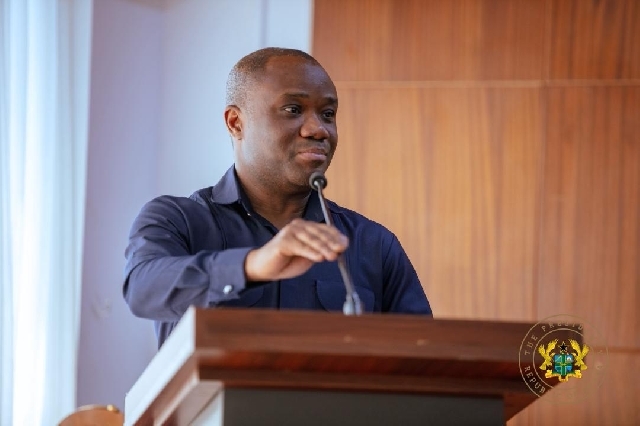 Felix Kwakye Ofosu
Ghana has joined the rest of the world in commemorating World AIDS Day 2025, reaffirming its strong commitment to eliminating HIV and AIDS through resilient health systems, inclusive public policies, and community-centred action.
The national observance, spearheaded by the Presidency Communications Office, served as a moment of reflection, solidarity, and renewed determination to transform Ghana’s response to the epidemic.
Government officials, health experts, civil society groups, and development partners came together to highlight both the progress made and the challenges that still remain in the fight against HIV/AIDS.
This year’s international theme, “Covering Disruption, Transforming the Response,” draws attention to the need for strong and adaptable healthcare systems that can withstand crises—such as pandemics, conflicts, and economic challenges—while maintaining essential services for vulnerable populations.
In line with this global call, Ghana adopted its national sub-theme, “Africa Unites Against AIDS,” emphasising the importance of regional collaboration and collective responsibility among African nations in the fight against the disease.
Although progress has been made over the years, HIV/AIDS continues to pose a significant public health challenge in the country.
Current national data reveals:
12,600 AIDS-related deaths annually
52,500 new HIV infections each year
315,000 people are currently living with HIV in Ghana
These statistics highlight the urgent need for intensified prevention campaigns, expanded access to treatment, and continuous public education to reduce new infections and save lives.
The government of Ghana reaffirmed its unwavering commitment to tackling the HIV epidemic through a range of evidence-based interventions, including:
Public education and awareness campaigns
Promotion of safe sex practices and widespread condom distribution
Harm reduction strategies for at-risk populations
Expanded access to Antiretroviral Therapy (ART) for people living with HIV
Strengthening healthcare facilities to ensure uninterrupted testing, treatment, and support services
Several key national programs were also highlighted as central to Ghana’s fight against HIV/AIDS:
The National HIV and AIDS Fund, which mobilises financial resources for prevention, treatment, care, and the National Workplace HIV and AIDS Policy, aimed at creating supportive, stigma-free, and non-discriminatory environments in both private and public institutions
The Ghana AIDS Commission Strategic Plan, which guides national efforts using data-driven approaches and targeted interventions
Community Involvement and Public Responsibility
The statement further emphasised that ending AIDS cannot be achieved by the government alone.
It called on communities, civil society organisations, faith-based groups, the private sector, and individuals to take active roles in the response. Citizens were encouraged to:
Know their HIV status through testing and self-testing kits
Seek early treatment and support where necessary
Support and show compassion to people living with HIV
Actively fight stigma, discrimination, and misinformation
Promote healthy lifestyles and responsible behaviour.
The message, signed by Felix Kwakye Ofosu, MP, Spokesperson to the President, urged all Ghanaians to unite in the national effort to end HIV and AIDS.
He stressed that the fight against HIV is not only a health concern but also a moral, social, and developmental responsibility that requires collective action from every Ghanaian.
“Together, we can transform the response and build a future free from AIDS,” the statement concluded.


Trending News
Nabdam MP cuts sod for new CHPS compound to end years of healthcare hardship in Soliga
11:13
Duke of Edinburgh plants tree at Aburi Botanical Gardens
11:46
It is 'childish entitlements' for Fourth Estate to demand Independence Day expenditure under RTI – Razak Kojo Opoku
11:13
Ga Mantse joins British community in Accra to celebrate King Charles III’s 77th birthday
11:14
Majority Caucus calls for public engagement as Parliament reviews Ghana’s lithium deal
13:59
CETAG declares indefinite strike over gov’t’s failure to implement NLC award
09:50
WAEC exec outlines skills gap causing decline in math performance
11:06
Ghana's galamsey fight hindered by political interference- Investigative journalist reveals
11:22
Rev. Opuni Frimpong hails Christian schools’ right to maintain their religious rules
11:02
NCPTA condemns 'rising religious discrimination in schools
11:06