
In defence of Act 794: Context, competitiveness and the real path to mining value
Feature Article
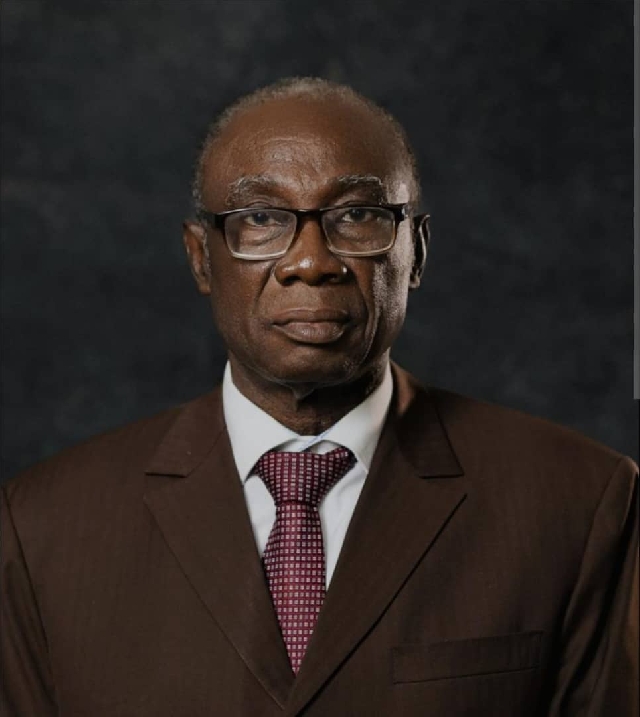 Dr Kwabena Donkor
I am surprised at the attack on the Prof Mills regime (whether directly or indirectly). Yes the Minerals and Mining Act 794 (2010) was passed at a time when Ghana was making a conscious effort to attract investment into the mining sector after a decade of decline. Today we are the largest gold producer in Africa because of the success of the investment drive.
Context is extremely important in politico-economic analysis and without situating critique in its proper context, you inadvertently mislead the reading public.
This is not to say that we should not look at amending the law.
There is this seemingly mystical fixation with royalty in this country. What really constitutes royalty? Royalty is a tax taken at the minehead for a mine and at the wellhead for petroleum. It is based on production and not profitability. It is the surest but also the laziest way of the State getting revenue in the extractive sector and considered regressive by tax scholars.
Am I against royalty? No. What I am against is the over reliance on royalty in the ‘State or Government Take’. Is it the only tool for State interest? No. There is no doubt the need for a second look at our royalty regime to introduce a sliding regime indexed to global price for the mineral. With a sliding royalty regime, the State takes more when prices rise and take less when prices fall to make the mine sustainable. Beyond a certain price threshold on the market, a windfall payment beyond the royalty should kick in so that the State as the resource owner shares with the entity the windfall.
What the write up does not emphasize sufficiently is the the same Act introduced a mandatory 10% equity for the State in every mine in Ghana additional to the royalty regime. It is therefore not like the State is only dependent on royalty and corporate income tax.
Do we have a mining and indeed extractive industry fiscal regime I am proud of? No.
We must do more. We do more not by imposing additional taxes. We must remain competitive in both our immediate neighbourhood and globally. Imposing additional taxes would not make us uncompetitive. Critics, especially from Civil Society must understand this. We must get more from our extractive resources than we are currently getting through participation! We must negotiate additional paying participation interest. The additional participation interest should not be limited to Government but to the Ghanaian polity. Currently Pension Funds in Ghana sit on close to a hundred billion cedis (GHC100,000,000,000). And this is just one source of funding. If the Pension Funds invest $50million ~ GHS600million in the Lithium project, they would own about 30% of equity if not more. It is this type of participation that is commercially desirable and in the national interest.
This must be the blueprint for enhanced national benefit from our resources. The needed additional reform is the strengthening of regulatory regimes to promote efficiency and the critical role of cost audits. We must eliminate transfer pricing and other practices that inflate cost and reduce profits in the extractive sector.
We must add to this value addition through processing. The Government of John Mahama must work to have in Ghana a certified gold refinery as its legacy for the gold sector.
Let me add that human capital in mining is not an issue because Ghana is a net exporter of high level human capital with very few expatriates in top mining positions.


Trending Features

Opinion: When leadership thinks faster than the Pen
09:51
Ghana’s Media Economy and Its Sustainability — Kwame Adinkra Writes
08:37
The changing global financial order and what it means for Ghana
08:31
Know the profile indepedent parliamentary aspirant for Kpone Katamanso 2028
15:44
Children are gifts with unique purposes
10:57
AI, new media, and the future of journalism in Ghana and Africa: Threat, transformation, and the role of NAB show
11:47