
Mahama urges bold financing and industrial action to secure Africa’s economic independence
News
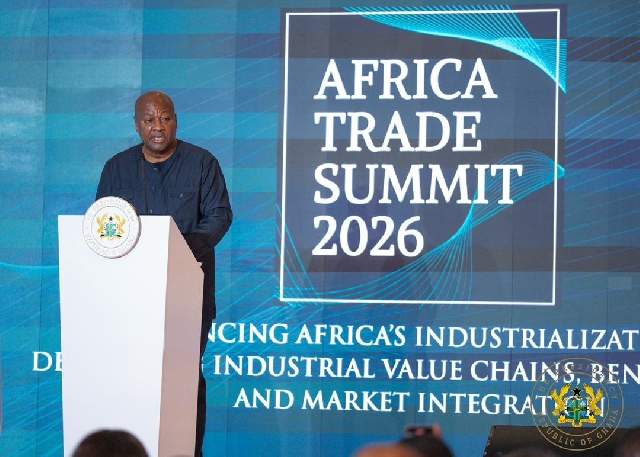 The Presidency (Pic):
President John Dramani Mahama has called for decisive action to finance Africa’s industrialisation, develop regional value chains, promote beneficiation, and deepen market integration, declaring that the continent stands at a historic turning point in its economic journey.
Speaking at the Africa Trade Summit 2026, the president said Africa’s defining task in this generation is achieving economic independence, stressing that political freedom without economic transformation remains incomplete.
“We can no longer accept an economic model that confines Africa to exporting raw materials and importing finished goods,” President Mahama said, describing the arrangement as a modern form of economic colonialism that perpetuates poverty and underdevelopment.
He emphasised that industrialisation based on Africa’s comparative advantages — particularly through manufacturing and agro-processing — is essential for job creation, income growth, skills development, and inclusive economic expansion. Despite these benefits, he noted that Africa’s share of global manufacturing remains below two per cent, with many economies locked into low-productivity primary production, forcing millions of young Africans to seek opportunities abroad.
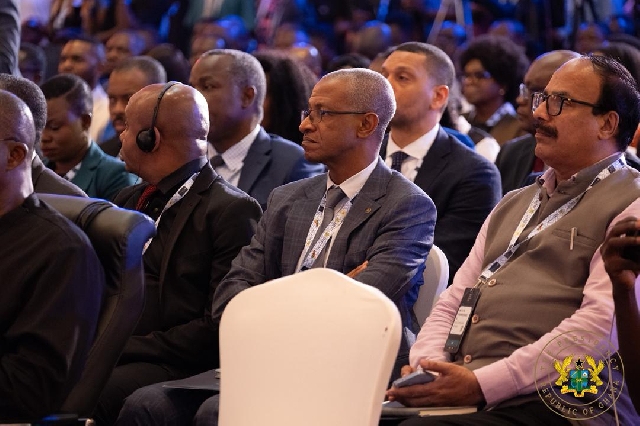
Financing Africa’s Industrialisation
President Mahama identified access to long-term, affordable finance as the central challenge confronting Africa’s industrial ambitions, particularly for small and medium-sized enterprises that employ most of the continent’s industrial workforce. He cited shallow financial markets, high interest rates, debt pressures, and limited investment beyond extractive sectors as major constraints.
To address these challenges, he outlined a multi-pronged strategy.
First, Africa must mobilise its domestic resources more effectively through improved revenue mobilisation, stronger public financial management, and decisive action against illicit financial flows.
Second, the president called for the mobilisation of Africa’s institutional capital, noting that pension funds, insurance companies, and sovereign wealth funds manage hundreds of billions of dollars that could be channelled into productive industrial investments through appropriate financial instruments, including industrial loans, infrastructure funds, diaspora financing, and blended finance vehicles.
He also urged greater empowerment of development finance institutions such as Afreximbank and the African Development Bank to mobilise private capital and support regional industrial projects.
Third, President Mahama stressed the importance of crowding in private sector investment through public-private partnerships, risk-sharing mechanisms, and credit guarantees, adding that investors require stable policies, transparent regulations, reliable infrastructure, and strong democratic governance.
He further highlighted the role of development partners and multilateral institutions in providing concessional finance, guarantees, and insurance to de-risk industrial projects, while urging reforms to the global financial system to ensure fair access to capital and sustainable debt solutions.
Value Addition and Resource Sovereignty
The president underscored the need for Africa’s industrialisation to be anchored in value addition and beneficiation, lamenting decades of raw material exports that have deprived African economies of jobs, technology, and revenue.
Using cocoa as an example, he noted that although Africa produces most of the world’s cocoa, it captures only a small share of the global chocolate market’s value. Similar imbalances, he said, exist in oil refining, textiles, and mineral processing.
In Ghana, President Mahama said government policy is deliberately shifting from a commodity-export model to a value-added economy, prioritising agro-processing and manufacturing aligned with the country’s natural advantages. Key focus areas include cocoa, cashew, palm oil, cassava, petroleum, gold, manganese, and bauxite.
On resource sovereignty, he called for an end to extractive models that primarily benefit foreign interests, stressing the need for African countries to claim a fairer share of their natural resource wealth. He cited Ghana’s establishment of the Ghana Gold Board as a major step in exercising greater control over gold exports.
According to the President, foreign exchange repatriation from small-scale gold exports has significantly improved since the board’s establishment in April 2025, with exports increasing and full repatriation of proceeds now achieved. Ghana has also strengthened local participation in mining through mandatory partnerships between foreign investors and indigenous companies under local content laws.
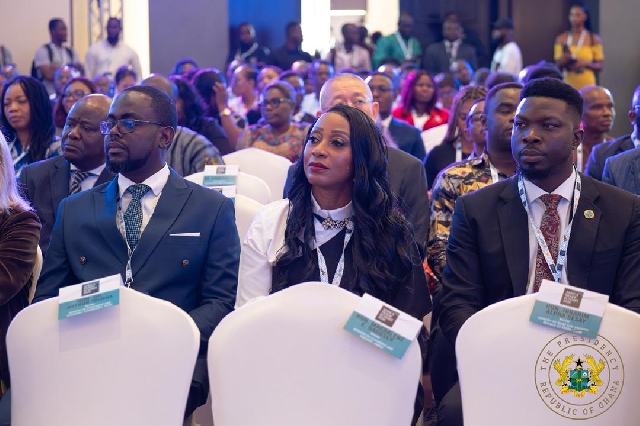
Regional Integration and AfCFTA
President Mahama stressed that industrialisation cannot succeed within fragmented national markets, arguing that Africa’s future lies in regional value chains. While not every country can produce everything, he said African nations can collectively build competitive industries by integrating production across borders.
He identified investments in transport corridors, energy grids, digital infrastructure, and regulatory harmonisation as critical enablers of industrial integration.
Describing the African Continental Free Trade Area (AfCFTA) as the most ambitious integration project in Africa’s history, the president said the agreement creates a single market of over 1.3 billion people and positions Africa as a viable manufacturing and investment destination.
Ghana, he noted, is proud to host the AfCFTA Secretariat and to be among the early adopters of trading under its preferences. However, he cautioned that AfCFTA will not automatically industrialise Africa unless it is deliberately linked to industrial policy, infrastructure investment, enterprise development, and trade facilitation reforms.
From Vision to Action
President Mahama concluded by calling for urgency, resolve, and collective action, urging African leaders to move from declarations to delivery and from agreements to implementation.
He envisioned an Africa with integrated industrial corridors, competitive supply chains, shared prosperity, and opportunities created at home, describing the goal as ambitious but achievable.
“This Africa Trade Summit must be remembered as the moment when commitments were matched with action,” he said, before officially declaring the Africa Trade Summit 2026 open.
Source: classfmonline.com/Pearl Ollennu


Trending News
“The foundation is strong, and the future is bright” — Ofosu-Adjare outlines Africa’s industrial financing agenda
17:00
Foreign Affairs Ministry approves Ghanaian passport for IShowSpeed
20:40
Chief Justice calls for stronger collaboration between Judiciray and Parliament
09:18
Gov't begins work on 10-year flood management master plan for Greater Accra
13:16
Energy Minister engages WAPCo on gas-to-power policy
12:49
Egyapa Mercer predicts Bawumia to win NPP race by 70%
08:53
'You can’t trace Ken Ofori-Atta's assets’ – NDC’s Ako Gunn reveals
11:41
Vice President Opoku-Agyemang engages Jacob’s Foundation to strengthen foundational education in Ghana
14:32
Attack on Class FM journalist: GJA gives Fire Service 14 days to make findings public or risk blacklisting
15:40
“Stay patriotic and non-partisan”: Opong-Fosu urges NUGS
20:32