

Minister for Local government commends assemblies for effective use of DACF
News
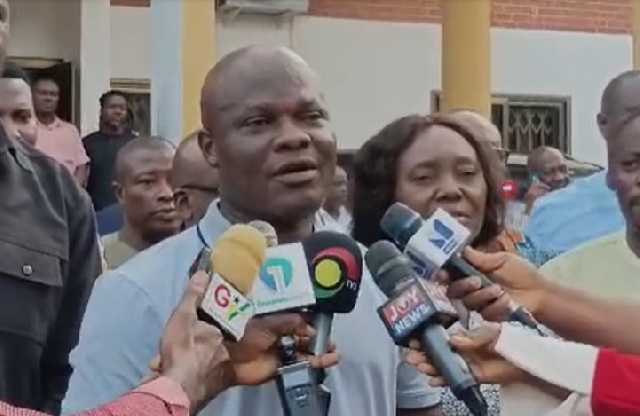 Minister for Local Government, Chieftaincy and Religious Affairs, Ahmed Ibrahim
The Minister for Local Government, Chieftaincy and Religious Affairs, Ahmed Ibrahim, has commended Metropolitan, Municipal and District Assemblies (MMDAs) for the manner in which they are deploying resources from the District Assemblies Common Fund (DACF), describing the overall performance as encouraging despite some assemblies yet to fully utilise their allocations.
Speaking after inspecting 10 municipal assemblies as part of a nationwide assessment of the performance of Metropolitan, Municipal and District Chief Executives (MMDCEs), the Minister said preliminary observations indicate that many assemblies have channelled substantial portions of their funds into development projects in accordance with government directives.
Mr. Ibrahim noted that concerns had earlier been raised about whether local authorities could effectively manage the increased flow of resources. However, findings from the ongoing exercise suggest that most assemblies are making meaningful progress in translating the funds into tangible development initiatives.
He explained that unlike Internally Generated Funds (IGF), which assemblies can spend with greater flexibility, the DACF is governed by strict expenditure rules. Under the framework, only five per cent of the allocation can be used for administrative expenses, while the remaining 95 per cent must be invested in infrastructure and other development projects.
According to the Minister, levels of fund utilisation differ from one assembly to another, with some having spent more than half of their allocations while others are yet to make significant progress.
“From what I have seen so far, the situation is quite positive. Assemblies have fully utilised their IGF, largely because there are no specific spending guidelines attached to those funds. With the DACF, however, spending is regulated, with only five per cent earmarked for administration and the rest dedicated to development projects. As a result, utilisation rates currently range from as high as 58 per cent, 54 per cent and 46 per cent, to as low as 3.9 per cent,” he stated.
Source: Classfmonline.com/Zita Okwang


Trending News

Pru East MP engages Energy Minister on electricity challenges in Bono East
11:22
Chairman Wontumi seeks plea bargain in EXIM bank fraud trial
12:51
Nearly half of Ghanaians say military rule can be justified, if gov'ts fail to fight corruption – UG Report
16:55
Vice President welcomes President Mahama home after UK and Belarus visits
07:52
PMMC’s 2024 SIGA award reflects successful turnaround, says Nana Akwasi Awuah
08:29
South Africa rejects Ablakwa's claims on attacks against Ghanaians in South Africa
17:20
Training without jobs only breeds frustration — Oppong Nkrumah calls for youth employment overhaul
13:09
Ghana Water Ltd inaugurates board of G-Water Bottling Ltd
14:40
Over 60% of traffic lights functional despite widespread component theft, says Roads Minister
16:56
GaDangme Council delegation commiserates with family of late Prof. J.S. Djanmah
23:44
