
Austria bans headscarves in schools for U-14s
World News
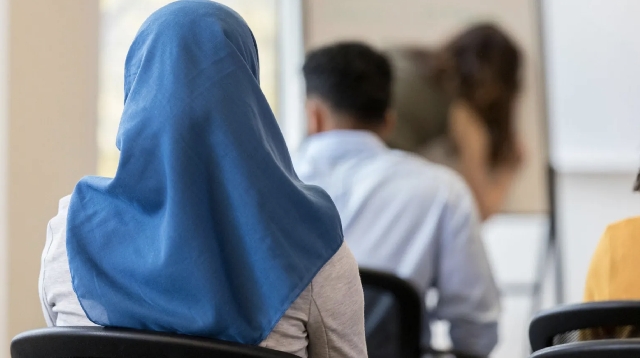 Getty Images (Pic):
Austria has passed a law banning headscarves in schools for girls under the age of 14.
The conservative-led coalition of three centrist parties, the ÖVP, the SPÖ and the Neos, says the law is a "clear commitment to gender equality", but critics say it will fuel anti-Muslim feeling in the country and could be unconstitutional.
The measure will apply to girls in both public and private schools.
In 2020, a similar headscarf ban for girls under 10 was struck down by the Constitutional Court, because it specifically targeted Muslims.
The terms of the new law mean girls under 14 will be forbidden from wearing "traditional Muslim" head coverings such as hijabs or burkas.
If a student violates the ban, they must have a series of discussions with school authorities and their legal guardians. If there are repeated violations, the child and youth welfare agency must be notified.
As a last resort, families or guardians could be fined up to €800 (£700).
Members of the government say this is about empowering young girls, arguing it is to protect them "from oppression".
Speaking ahead of the vote, the parliamentary leader of the liberal Neos party, Yannick Shetty said it was "not a measure against a religion. It is a measure to protect the freedom of girls in this country," and added that the ban would affect about 12,000 children.
The opposition far-right Freedom Party of Austria, the FPÖ, which voted in favour of the ban, said it did not go far enough.
It described the ban as "a first step", which should be widened to include all pupils and school staff.
"There needs to be a general ban on headscarves in schools; political Islam has no place here", the FPÖ's spokesperson on families Ricarda Berger said.
Sigrid Maurer from the opposition Greens called the new law "clearly unconstitutional".
The official Islamic Community in Austria, the IGGÖ, said the ban violated fundamental rights and would split society.
In a statement on its website, it said "instead of empowering children, they will be stigmatised and marginalised."
The IGGÖ said it would review "the constitutionality of the law and take all necessary steps."
"The Constitutional Court already ruled unequivocally in 2020 that such a ban is unconstitutional, as it specifically targets a religious minority and violates the principle of equality," the IGGÖ said.
The government says it has tried to avoid that.
"Will it pass muster with the Constitutional Court? I don't know. We have done our best," Shetty said.
An awareness-raising trial period will start in February 2026, with the ban fully going into force next September - the beginning of the new school year.
Source: bbc.com


Trending World
Iran begins 40-day mourning after Khamenei killed in US-Israeli attack
04:29
Kidnapping of foreigners soars in Africa's lawless Sahel region
04:04
'It's eerie' - Dubai on edge as city comes under attack by Iran
03:55
Oil prices rise after ships attacked near Strait of Hormuz
03:50
Nigeria denies report it paid 'huge' ransom to free pupils in mass abduction
00:08
Ramaphosa thanks Putin for release of South Africans lured into Russia-Ukraine war
18:50
Rob Jetten becomes Netherlands' youngest ever PM
02:33
Mexico sends thousands of soldiers to stop violence after death of drug lord
02:31
Chad shuts border with Sudan in bid to stop conflict spreading
02:25
Threat of further violence looms after Mexican cartel rampage
18:30