

Israel strikes Lebanon after first rocket attack since ceasefire
World News
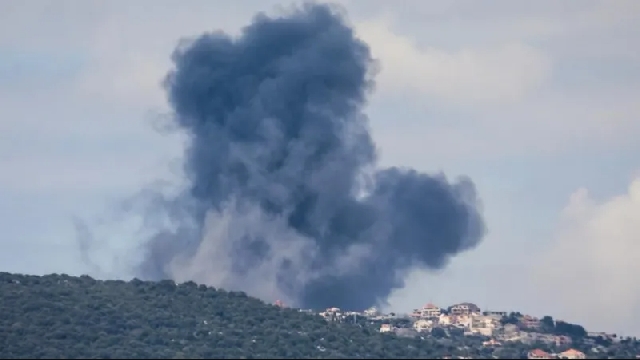 Reuters (Pic): Smoke billows from the site of Israeli strikes in southern Lebanon
Israel says it has hit dozens of Hezbollah rocket launchers and a command centre in southern Lebanon after rockets were fired from there into Israel for the first time since November's ceasefire deal.
Israeli Prime Minister Benjamin Netanyahu earlier said he had instructed the Israel Defense Forces (IDF) "to act forcefully against dozens of terror targets".
Lebanon's state media said one person was killed in the Israeli strikes.
The IDF said three rockets were intercepted in the northern Israeli town of Metula on Saturday morning. There were no injuries. No group has so far admitted firing the rockets, and Lebanon's prime minister warned against his country being dragged "into a new war".
The ceasefire deal ended 14 months of fighting with Hezbollah, the Lebanese armed group backed by Iran.
The UN peacekeeping force in Lebanon, Unifil, said it was "alarmed by the possible escalation of violence", urging both Israel and Lebanon to "uphold their commitments".
Local reports in Lebanon said artillery had fired into some southern locations of the country.
The Lebanese army said it had conducted a search operation, discovering "three primitive rocket launchers" which it dismantled.
The truce has been fragile: Israel has carried out nearly daily air strikes on what it describes as Hezbollah targets, and has indicated that attacks will continue to prevent the group from rearming.
In addition to that, the Israeli military is still occupying five locations in southern Lebanon, in what the Lebanese government says is a violation of the country's sovereignty and a breach of the ceasefire deal, which required the withdrawal of Israeli troops.
Israel says the Lebanese military has not yet fully deployed to those areas, and that it needs to remain at those points to guarantee the security of its border communities.
Saturday's rocket attack into Israel will put even more pressure on the Lebanese government, and probably be used as proof by Israel that the Lebanese army does not have full control of border areas.
Despite Israel's constant attacks, Hezbollah has not responded. The group faces the huge challenge of providing financial help to its communities affected by the war, and pressure from its opponents to disarm.
Source: bbc.com


Trending World

Trump says he does not want Somalis in US as ICE plans Minnesota operation
13:12
Kenyan MPs accuse British soldiers of sexual abuse and environmental destruction
13:03
Putin hosts Trump negotiators at Kremlin for 'constructive' Ukraine talks
01:20
Trump to host signing of peace deal between leaders of DR Congo and Rwanda
12:30
Oil, defence and geopolitics: Why Putin is visiting Modi in Delhi
13:16
Putin says Russia ready to supply 'uninterrupted' fuel to India
19:49
Germany votes to bring in voluntary military service programme for 18-year-olds
19:42
Olympian and other Eritreans freed after 18 years without trial, relatives tell the BBC
16:09
Namibia loses bid to overturn ban on rhino horn trade
16:06
Kenya signs landmark health deal with US despite data fears
16:02