Ayawaso East and the politics Ghana must no longer tolerate
Feature Article
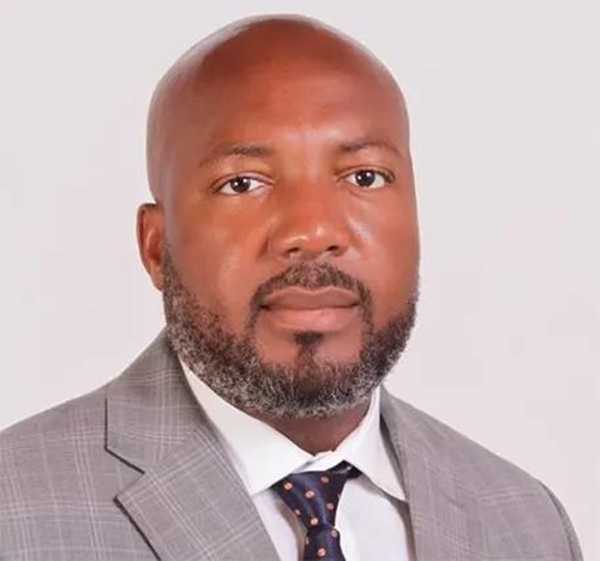 George Spencer Quaye
For far too long, Ghanaian politics has treated electoral misconduct—especially within political parties—not as a democratic aberration, but as an inconvenient tradition.
Vote-buying, inducement and manipulation have been quietly normalised under the cynical excuse that “this is how politics is done”.
The events surrounding the NDC parliamentary primaries in Ayawaso East, and more importantly, the actions that followed, suggest that this dangerous indulgence may finally be meeting its end.
The primaries, won by Baba Jamal, Ghana’s High Commissioner to Nigeria, were overshadowed by serious allegations of bribery and voter inducement.
Ordinarily, such controversies are buried under party solidarity, delayed by internal manoeuvring, or dismissed as the complaints of aggrieved losers.
This time, the response was different — and deliberately so.
The NDC’s decision to institute a formal enquiry, chaired by the respected statesman Mr Kofi Totobi Quakyi, is not an act of damage control; it is an assertion of principle. Political parties are the gatekeepers of leadership.
If they fail to enforce ethical standards internally, the state inevitably pays the price through corruption, inefficiency and weak governance.
By opening its own primaries to scrutiny, the NDC has acknowledged a truth many parties avoid: democracy begins at home.
Even more consequential is President John Dramani Mahama’s decision to recall Baba Jamal from his ambassadorial post.
This is where the reset becomes unmistakable.
The recall is not about prejudging guilt; it is about responsibility.
Public office, especially diplomatic office, cannot coexist with unresolved ethical questions.
By acting decisively, President Mahama has signalled that status, history, and loyalty will no longer insulate individuals from the consequences of alleged misconduct.
This marks a clear departure from Ghana’s traditional political culture, where accountability is often selective, and reforms are postponed in the name of unity.
President Mahama is making a far more disruptive choice: prioritising institutional integrity over short-term political comfort.
The Majority Caucus in Parliament, calling for the annulment of the primaries, completes this triad of reform.
Parliamentarians rarely challenge such outcomes, having themselves at times been both beneficiaries and participants in similar processes.
The NDC Majority has therefore given an indication of its willingness to subject itself to future accountability on the same grounds.
Doing so requires political courage and a readiness to place democratic credibility above partisan advantage.
In supporting annulment, the caucus has reinforced a critical message: elections — whether internal or national — must be credible to be legitimate.
Taken together, these actions reveal something larger than crisis management.
They reflect President Mahama’s determination not only to change how Ghana is governed, but also how politics itself is practised.
This is the deeper layer of the Reset Agenda — one that targets the culture that produces leaders, not just the systems they inherit.
President Mahama’s Reset Agenda has often been discussed in terms of public sector efficiency, economic reform and governance renewal. What is unfolding now suggests something deeper: a reset of political party culture itself.
The NDC is not merely preparing to govern differently; it is learning to organise, contest and self-correct differently.
Ghana’s economic challenges are frequently discussed in terms of debt, productivity and fiscal discipline.
Yet the root cause of economic underperformance is often ethical failure: leaders selected through compromised processes rarely govern with integrity, discipline or long-term vision. You cannot build a strong economy on weak ethics.
You cannot attract sustainable investment in a political culture that rewards inducement over ideas.
President Mahama appears keenly aware that lasting economic transformation requires political reform.
By insisting on cleaner internal politics, he is attempting to reshape the pipeline from which national leadership emerges.
This is how legacies are built — not through slogans, but through uncomfortable decisions that reset expectations for generations.
The NDC’s response to Ayawaso East is therefore not just about one constituency or one candidate.
It is a statement that the party understands the moment Ghana is in, and the kind of politics the future demands. A party willing to discipline itself is a party capable of reforming the state.
If sustained, this posture could redefine political competition in Ghana, compelling all parties to confront practices they have long tolerated. That is how democratic progress happens — not through perfection, but through precedent.
Ghana does not merely need new policies; it needs a new political ethic.
President Mahama’s actions suggest a leader intent on leaving behind more than a record of governance — he seeks to leave a reformed political culture that produces ethical leaders capable of driving sustainable economic growth.
His response also signals a leadership determined to dismantle entrenched political habits and entrench accountability as the foundation of Ghana’s democratic and economic renewal.
It reinforces what has increasingly become a governing creed: that public office is about service and accountability to the people.
And if any appointee ever doubted that His Excellency the President would act decisively when standards are breached, the recall of Baba Jamal serves as a clear reminder that ethical lapses carry consequences.
The Ayawaso East moment is a test. But it is also an opportunity. And for once, Ghanaian politics appears willing to choose reform over ritual.
George Spencer Quaye, Member, National Democratic Congress
The author is a governance and digital transformation strategist, public policy commentator and board-level leader.
He writes on leadership, political reform and Africa’s development trajectory. He’s currently serving as the Chairman of the Governing Board of the Driver and Vehicle Licensing Authority
Source: Classfmonline.com