
CHRAJ warns child labour keeps almost half a million Ghanaian children out of school
Education
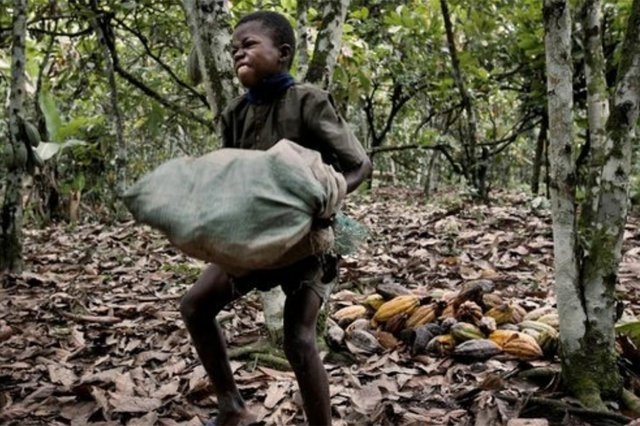 A child working in a cocoa farm
The Commission on Human Rights and Administrative Justice (CHRAJ) has warned that child labour continues to keep thousands of children out of school in Ghana, despite constitutional protections and international commitments aimed at ending the practice.
In a statement issued on June 12, 2026, to mark the World Day Against Child Labour, the Commission emphasized that protecting children's rights is a fundamental measure of a society's commitment to human dignity and social justice.
CHRAJ noted that child labour "continues to deprive many children of their right to education, protection, development and a safe and dignified childhood."
The problem persists despite Ghana's existing legal safeguards, which include:
- The 1992 Constitution
- The Children’s Act, 1998 (Act 560)
- The United Nations Convention on the Rights of the Child
- The African Charter on the Rights and Welfare of the Child
CHRAJ described the global and national scale of child labour as "deeply concerning." Globally, approximately 138 million children are engaged in child labour, with nearly 54 million involved in hazardous work.
In Ghana, the Commission cited Ghana Statistical Service data from 2023 showing that more than 1.1 million children aged 5–17 were engaged in economic activity.
“Alarmingly, over 458,000 of these children were not attending school,” the statement noted, adding that this reality prevents children from accessing education and opportunities that could help break the cycle of poverty.
Operating under the theme “Red Card to Child Labour: Fair Play for Children, Decent Work for Adults,” the Commission called for a renewed national commitment to tackle the issue.
CHRAJ stressed that child labour is a direct violation of national and international law, and urged stronger action to address the underlying conditions that expose children to exploitation, warning that inaction risks deepening inequality and undermining long-term development.
Source: classfmonline.com


Trending News

Pru East MP engages Energy Minister on electricity challenges in Bono East
11:22
Chairman Wontumi seeks plea bargain in EXIM bank fraud trial
12:51
Nearly half of Ghanaians say military rule can be justified, if gov'ts fail to fight corruption – UG Report
16:55
Vice President welcomes President Mahama home after UK and Belarus visits
07:52
PMMC’s 2024 SIGA award reflects successful turnaround, says Nana Akwasi Awuah
08:29
South Africa rejects Ablakwa's claims on attacks against Ghanaians in South Africa
17:20
Training without jobs only breeds frustration — Oppong Nkrumah calls for youth employment overhaul
13:09
Ghana Water Ltd inaugurates board of G-Water Bottling Ltd
14:40
Over 60% of traffic lights functional despite widespread component theft, says Roads Minister
16:56
GaDangme Council delegation commiserates with family of late Prof. J.S. Djanmah
23:44