

GRA/Truedare contract sparks outrage over potential system duplication
Business
 Anthony Kwesi Sarpong , Acting GRA boss
Concerns are mounting over a recently approved digital customs tracking agreement between the Ghana Revenue Authority (GRA) and Cyprus-registered Truedare Investments Limited, as experts argue that the contract duplicates functions already embedded within Ghana’s Integrated Customs Management System (ICUMS).
Although Parliament was told the Truedare platform would introduce “AI-driven” tracking and audit tools at no additional cost to the state, critics say the deal reflects policy inconsistency rather than technological innovation.
The Truedare agreement was presented as a solution to plug revenue leakages at the ports by tracking container contents in real time, strengthening valuation and classification, and enhancing pre- and post-arrival audits.
However, a closer technical review suggests that these functions are neither novel nor absent from ICUMS.
Instead, they represent modules and analytics capabilities that already exist within the system or can be activated through configuration and resourcing.
Introduced nationwide in 2020, ICUMS was designed as Ghana’s flagship single-window customs platform, replacing the fragmented GCNet and WestBlue systems. It captures end-to-end customs data, including manifests, declarations, valuation, classification, risk profiling, inspections, releases, and post-clearance audits, while maintaining comprehensive audit trails. The platform also integrates other border agencies into a unified workflow, reducing duplication and interface fatigue.
Industry analysts note that modern “AI-driven” customs audits are not standalone systems but analytical layers that sit atop data-rich platforms such as ICUMS.
These tools ingest existing transaction data, generate risk scores, and feed alerts back into established customs workflows. From this perspective, the claim that ICUMS lacks the capacity for AI-supported audits is seen as conflating system capability with policy choice.
Additional concern has been raised about the profile of Truedare Investments Limited itself. Corporate filings indicate the company was incorporated in December 2024, has a declared share capital of just €1,545, and lists “general trade” as its core object. With no publicly documented track record in large-scale customs technology, its integration into Ghana’s customs data architecture has triggered questions about due diligence and long-term data governance.
Financial transparency is another sticking point. While government officials have insisted the arrangement comes at “no additional cost to the state,” critics argue that such claims should be treated cautiously, particularly in the wake of the Strategic Mobilisation Limited (SML) controversy. In practice, performance-based or off-budget digital contracts often translate into higher compliance costs for traders, with downstream effects on consumer prices.
Operationally, the Truedare deal also risks undermining the single-window philosophy that underpinned ICUMS. Introducing a parallel system for tracking and audit could re-fragment port operations, create overlapping dashboards, and blur accountability among vendors and enforcement agencies—precisely the inefficiencies ICUMS was meant to eliminate.
Analysts argue that Ghana’s challenge at the ports is not a lack of systems, but the under-utilisation of existing ones. Rather than bolting on external platforms, they say the focus should be on strengthening internal analytics, governance, and enforcement within ICUMS itself.
As Ghana works to restore fiscal credibility and investor confidence, the Truedare contract has become a test case for how seriously the state treats coherence, transparency, and value for money in digital revenue reforms.


Trending Business

Leila Djansi: Filmmaker calls for hourly wages and commission-based pay to improve work attitudes in Ghana
00:53
C/R: Planned power outage to hit Cape Coast on January 8
21:15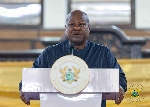
Ghana not going to IMF after current bailout ends - President Mahama
20:58
BoG calls on UK diaspora to invest beyond remittances
16:44
GRA Tax Division visits Palace Mall to enforce VAT reduction and COVID-19 levy removal
11:56
VALCO targets 5,000 jobs, $1 billion annual GDP
10:50
VALCO to end number plate imports from China, announces DVLA partnership for local production
11:52Expired D.V. plates illegal in 2026 — DVLA urges vehicle owners to renew early
09:57
GIPC Boss urges diaspora to invest remittances into productive ventures
15:27
FABAG rejects Tema Port claims, warns of worsening conditions at bulk and bagged cargo section
12:15