
Ghana's crude oil production declines for 6th consecutive year – IES
Business
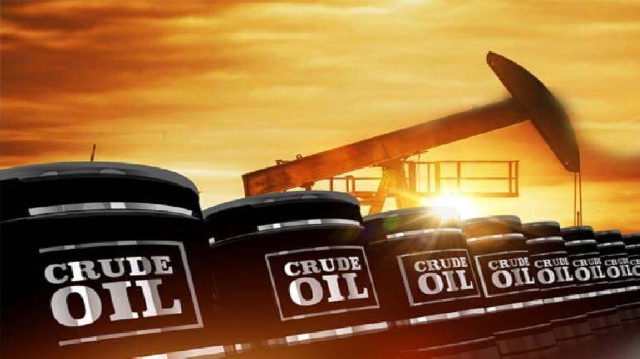 Crude oil
Ghana's crude oil production has declined for the sixth consecutive year, falling from a peak of 71.44 million barrels in 2019 to 37.30 million barrels in 2025, with output expected to drop further in 2026, according to a new report by the Institute for Energy Security (IES).
The report, titled Ghana's Crude Oil Production Decline, 2020–2026: A Critical Analysis of Driving Factors, Energy Security Implications and Policy Directions for Reversal, projects production will decline to 34.83 million barrels in 2026, representing another 6.7% fall.
According to the IES, Ghana's oil production grew steadily after first oil from the Jubilee Field in 2010, reaching a peak of 71.44 million barrels in 2019. However, output has declined every year since, marking six consecutive years of contraction.
The report notes that production fell from 66.93 million barrels in 2020 to 55.05 million barrels in 2021, 51.76 million barrels in 2022, 48.25 million barrels in 2023, 48.24 million barrels in 2024 and 37.30 million barrels in 2025.
The IES described the trend as a structural problem rather than a temporary downturn, warning that the sustained decline poses significant risks to Ghana's fiscal position and energy security.
It attributed the decline to several factors, including natural depletion of existing oil reservoirs, the absence of replacement reserves, operational disruptions and underinvestment in the upstream petroleum sector.
The report identifies the failure to sign a new Petroleum Agreement since 2018 as one of the most significant policy shortcomings, saying Ghana's production remains dependent on just three ageing offshore fields — Jubilee, Tweneboa-Enyenra-Ntomme (TEN) and Sankofa Gye Nyame (SGN).
It also cited production interruptions at the Jubilee Field, including a planned maintenance shutdown in 2025, as contributing to the sharp decline recorded last year.
According to the IES, the Ministry of Finance's 2026 Budget Statement and the Ministry of Energy and Green Transition have both acknowledged the country's declining oil production, with average daily output falling from about 200,000 barrels in 2019 to around 150,000 barrels in 2025.
The institute warned that continued production declines could affect government revenue, thermal power generation, energy transition financing and Ghana's broader energy security if urgent interventions are not implemented.
To reverse the trend, the report recommends restarting competitive petroleum licensing rounds, accelerating investment in new wells, strengthening the Ghana National Petroleum Corporation (GNPC), improving reservoir management and ensuring strict implementation of government commitments aimed at boosting production.
The report was authored by Smith Prosper Boahene and Prince Lumor of the Institute for Energy Security.
Source: classfmonline.com


Trending Business

COCOBOD rolls out nationwide farmer sensitisation campaign on free input distribution and major cocoa sector reforms
12:37
Chinese Africa Business Council explores investment opportunities in Volta water infrastructure
12:11
Fuel prices set to drop from July 16 despite Middle East tensions, says COMAC CEO
04:02
GOLDBOD joins nationwide clean-up exercise following June 29 floods
22:06
NIC, Insurance industry deploy claims desks and urge Ghanaians to insure against flood losses
15:33
Electrocem eyes higher salt output with mechanisation drive
12:06
Women's Development Bank nears launch as Vice President signals next phase
14:27
MoMo fraud relies on psychological manipulation, not hacking, says Bank of Ghana
14:13
SSNIT launches Membership Value Programme to deliver benefits to workers and pensioners now
12:30
Mahama urges investors to tap opportunities in Afram plains as Ekye Amanfrom bridge takes shape
00:07
