
Ghana's current account posts a surplus of US$9.1 billion by end-December 2025 as compared to US$1.5 billion in 2024
Business
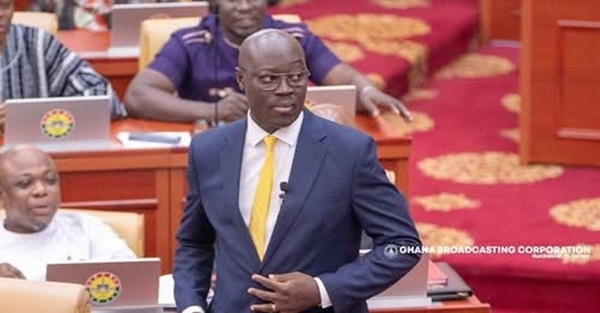 Dr Casiel Ato Forson
The government has announced what it describes as one of the most significant economic turnarounds in Ghana’s history, citing robust fiscal performance and broad-based macroeconomic improvements in 2025.
According to official figures released on Monday by the Ministry of Finance, the economy rebounded strongly following challenges inherited at the end of 2024.
At that time, the primary balance on a commitment basis stood at a deficit of 3.0 percent of GDP, the 91-day Treasury bill rate was 27.7 percent, the Ghana cedi had depreciated by 19.2 percent against the US dollar, and inflation was 23.8 percent.
The government said a combination of fiscal discipline, tighter commitment controls, structural reforms and prudent monetary policy restored macroeconomic stability and placed public finances back on a sustainable path.
For 2025, the overall fiscal balance on a commitment basis recorded a deficit of 1.0 percent of GDP, outperforming the target of 2.8 percent.
The primary balance on a commitment basis improved to a surplus of 2.6 percent of GDP, exceeding the target of 1.5 percent.
On a cash basis, the overall fiscal deficit narrowed to 3.1 percent of GDP, better than the 3.8 percent target, while the primary balance recorded a surplus of 0.5 percent of GDP against a projected deficit of 0.5 percent.
The government attributed the strong fiscal outturn to reforms in revenue mobilisation and tighter expenditure controls.
The improved fiscal performance, coupled with debt management strategies, led to a significant decline in public debt. Ghana’s total public debt stock fell by GHS 82.1 billion, from GHS726.7 billion (61.8 percent of GDP) in December 2024 to GHS641.0 billion (45.3 percent of GDP) in December 2025.
Officials described the reduction as one of the sharpest in the country’s history.
Beyond fiscal consolidation, the government highlighted strong macroeconomic gains in 2025.
Real GDP grew by a provisional 6.1 percent year-on-year in the first three quarters of 2025, driven largely by services and agriculture. Non-oil growth reached 7.5 percent over the same period, up from 5.8 percent in 2024.
Inflation declined for thirteen consecutive months, falling sharply from 23.5 percent at the end of January 2025 to 3.8 percent by January 2026.
Interest rates also dropped significantly.
The 91-day Treasury bill rate fell from 27.7 percent at the end of 2024 to 11 percent in December 2025, and further to 6.5 percent in February 2026.
The average commercial bank lending rate declined from 30.25 percent in 2024 to 20.45 percent in 2025, with further reductions expected as inflation continues to ease.
Credit to the private sector expanded by GHS17.1 billion in 2025, with projections pointing to continued growth in 2026.
The Ghana cedi recorded strong gains in 2025, appreciating by 40.7 percent against the US dollar, 30.9 percent against the pound sterling, and 24.0 percent against the euro by end-December 2025.
Ghana’s external position also strengthened.
The current account posted a surplus of US$9.1 billion by end-December 2025, compared to US$1.5 billion in 2024, while gross international reserves rose to US$13.8 billion, covering 5.7 months of imports.
The government emphasised that the macroeconomic turnaround has been broad-based, with improvements recorded across all sectors of the economy.
Between 2024 and 2025, inflation declined from 23.8 percent to 5.4 percent and has since fallen further to 3.8 percent.
The cedi’s appreciation in 2025 marked a reversal from the 19.2 percent depreciation recorded in 2024, while public debt declined significantly over the same period.
The administration of John Dramani Mahama reaffirmed its commitment to sustaining the gains to drive job creation and place the economy on a path of strong growth and long-term transformation.
Source: Classfmonline.com/Cecil Mensah


Trending Business

COMAC and CBOD condemn alleged diversion of LPG fund
01:41
COCOBOD workers reject proposed salary cuts amid falling cocoa prices
15:33
Dzifa Gomashie, Ofosu-Adjare engage smock producers to strengthen Fugu value chain
13:35
COCOBOD raises cocoa producer price to ¢41,392/tonne, effective Feb 20
12:17
BoG urges shift from stability to durability as MPC cuts policy rate to 15.5%
06:32
Ejura maize farmers cry for ready buyers, seek partnerships for solutions
02:02
Abossey Okai Spare Dealers urge calm, cooperation as new tax takes effect
02:55
Parliamentary Committee engages Oceana Global on fisheries governance and blue economy
08:20
Eric Opoku leads Ghana Tree Crops Investment Summit to drive green economic growth
07:58
Ghana targets diversification with major investment in cashew, coconut, rubber and shea
15:05
