

Government statistician projects inflation decline ahead of harvest season
Business
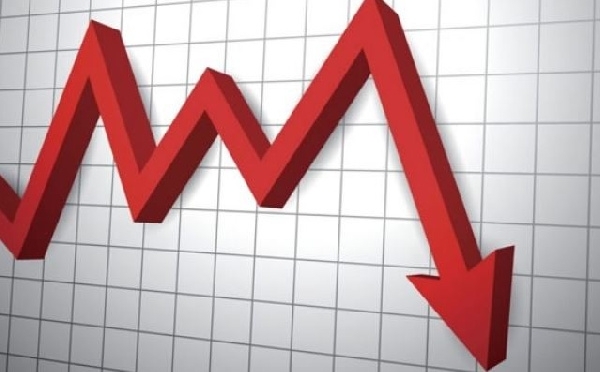 Inflation decline
Government Statistician Dr Alhassan Iddrisu says inflation is expected to ease later in the year as the country approaches the main harvest season.
He explained that food items make up a significant portion of the Consumer Price Index (CPI), and improved food supply during the harvest period could help reduce price pressures.
Dr Iddrisu made the remarks on PM EXPRESS Business Edition on June 16, 2026, hosted by George Wiafe.
“We are heading towards the main harvest season and historically that brings prices down. And that should give us some comfort,” he said.
He added that inflation is not expected to remain at current levels indefinitely. “We don’t expect things to stay at these high levels forever; at a point in time, things will slow down,” he noted.
His comments come amid rising food inflation, which has raised concerns about further increases in overall inflation in the coming months and the possibility of moving beyond the single-digit range by December.
Food inflation rose from 2.2 per cent in April 2026 to 3.3 per cent in May 2026 year-on-year. Month-on-month inflation also increased to 2.0 per cent from April to May, described as the fastest monthly rise recorded in recent times.
The increases were driven by higher prices of items such as tomatoes, ginger, charcoal and other food commodities, alongside supply constraints affecting some food items. However, Dr Iddrisu noted that some food prices have also declined, describing the situation as mixed.
“What we have seen is not all about explosive prices, but the situation has been mixed,” he said.
He maintained that inflation is on a downward path overall and does not expect it to become unmanageable.
He also pointed to recent recovery of the cedi, saying it could influence the cost of imported inputs used in agriculture as well as imported food products.
Dr Iddrisu urged government to maintain fiscal discipline, invest in food systems such as storage, irrigation and transport, and address regional disparities in market access.
He said such measures would help cushion the economy against potential shocks that could affect inflation outcomes.
On the agricultural sector, he noted that GDP estimates for the first quarter showed slower growth, falling from 6.6 per cent in the first quarter of 2025 to 4.4 per cent.
He said the fishing sub-sector recorded declines of -18.5 per cent year-on-year and -3.8 per cent quarter-on-quarter.
While acknowledging concerns about the sector’s performance, he said other sub-sectors recorded moderate growth and suggested that agriculture could improve with the right interventions.
He called for increased investment in agriculture and targeted measures to address challenges within the fishing sub-sector, adding that the sector has the potential to perform better than its current levels.
Source: classfmonline.com


Trending Business

Bank of Ghana honoured by Ghana Journalists Association for transparency, media engagement
12:29
IEAG defends ICUMS, dismisses CSOs’ claims as misleading and unsupported
01:25
Ghana Gas dismisses reports of leadership rift, cites operational gains and staff promotions initiative
15:01
SSNIT pension scheme can pay benefits for next 40 years – Director General
04:04
SpaceX IPO makes Elon Musk the world’s first trillionaire
05:21
Government statistician projects inflation decline ahead of harvest season
01:44
GNPC and partners commit over $3.5b to boost oil and gas production
01:20
NPA reduces petrol, diesel and LPG price floors for second June pricing window
01:17
GOIL PLC holds 57th Annual General Meeting in Accra
09:18
TOR explores global energy partnerships at 2026 Calgary Energy Show
07:24
