A new Africanism is rising: Why identity matters now
Feature Article
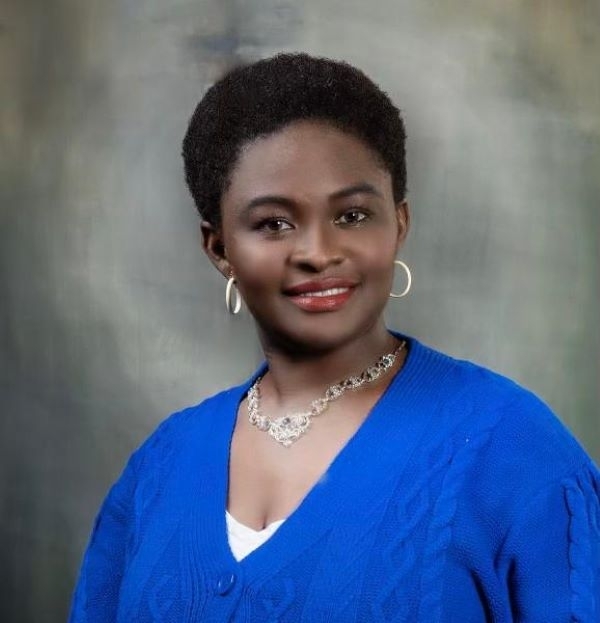 Dr Shirley Ayangbah is the founder of Global Economic Research Consulting (GERC), and a strong advocate for culturally grounded development in Africa
A quiet revolution is moving across Africa — not in parliaments or protest squares, but in classrooms, hairstyles, languages, and the self-perception of a new generation. It is a cultural and political awakening that signals a shift in how Africans see themselves and how they intend to position the continent in the future. A new Africanism is rising, and at its center is a simple but profound idea: identity is power.
For decades, African identity was managed, shaped, and sometimes suppressed by inherited colonial standards. Even today, the remnants linger. In many African schools, young girls are still required to cut their natural hair, follow European grooming codes, and conform to rules created not for African children but for the mission schools of the colonial era. The enforcement of short hair was never about discipline; it was about erasing the visible markers of African femininity and pride.
But across the continent, that era is fading. From Accra to Nairobi, Lagos to Johannesburg, a new movement is challenging these outdated norms. African girls are wearing their natural hair proudly — cornrows, afros, braids, twists, locs — reclaiming a cultural identity that was never meant to be lost. Their appearance has become a bold statement that Africa will no longer apologize for itself. What was once seen as defiance is now recognized as liberation.
This cultural shift is not merely aesthetic. It is political. It is economic. It is continental.
Economist Jeffrey Sachs, a longtime advocate for African sovereignty, has repeatedly argued that Africa’s future will be determined not by external advice, but by Africans reclaiming their identity and defining their own development path. Sachs has emphasized that Africa’s poverty is not a natural condition but a manufactured one, famously noting that “Africa is not poor; it is impoverished.” He maintains that global systems — from debt structures to commodity pricing — often undermine African progress, while cultural erasure weakens African confidence and unity.
According to Sachs, culture and dignity are not side issues; they are central to sustainable development. He argues that no continent can rise while its people measure themselves against standards not designed for them. In his global lectures, he stresses that Africa must reclaim its narrative, its cultural authority, and the right to shape its future without external pressure.
This is precisely what the new Africanism embodies. It recognizes that identity is not a distraction from development — identity is the foundation of development. A people who are unsure of who they are cannot negotiate from a place of strength, cannot demand fair global treatment, and cannot envision a unified destiny.
And unity is the heart of this movement.
Across intellectual and political circles, there is growing acknowledgement that no single African nation can become a global superpower alone. Not Ghana. Not Nigeria. Not Kenya. Not South Africa. The world’s most influential actors today — the United States, the European Union, China, India — are either continental or population giants. Africa’s fragmentation into 55 states weakens its bargaining power, dilutes its voice, and keeps its vast resources vulnerable to exploitation.
A unified Africa — often called the United States of Africa — is emerging once again in public discourse, not as a romantic dream but as a strategic necessity. A continent with 1.4 billion people, the world’s youngest population, the richest mineral reserves, and unmatched solar potential could, if united, become one of the most powerful entities on earth. The African Continental Free Trade Area (AfCFTA) is the first concrete step in that direction — an acknowledgment that Africa’s future lies in collective strength, not isolated ambition.
This rising Africanism is driven by the youth. They are questioning everything — school policies, beauty standards, the curriculum, the media narratives, even how African leaders engage internationally. They refuse to be told that their hair is unprofessional, their languages are inferior, or their history is irrelevant. They reject the idea that Africa must imitate the West to be modern. Instead, they are asserting that Africa can be modern on its own terms.
The hairstyles of African girls, once controlled and shamed, have become symbols of the larger movement: Africa reclaiming what was taken, redefining what was distorted, and rebuilding what was interrupted. When a child is told her natural hair is unacceptable, she learns that her identity is unacceptable. When she is told her natural hair is beautiful, she learns that she is powerful.
That lesson is shaping a generation.
A new Africanism is emerging — confident, self-assured, unapologetic, and deeply united. It is expressed in culture but aimed at politics. It starts with identity but ends with sovereignty. It begins with self-acceptance but leads to continental power.
Africa’s path to becoming a global superpower will not be built on imitation. It will be built on unity, cultural confidence, and the unshakeable belief that Africa has the right — and the capacity — to define its own destiny.
And for the first time in a long time, Africa is beginning to believe exactly that.
Source: By Dr. Shirley Ayangbah