
NACOC boss says informant wanted house in exchange for drug intelligence
News
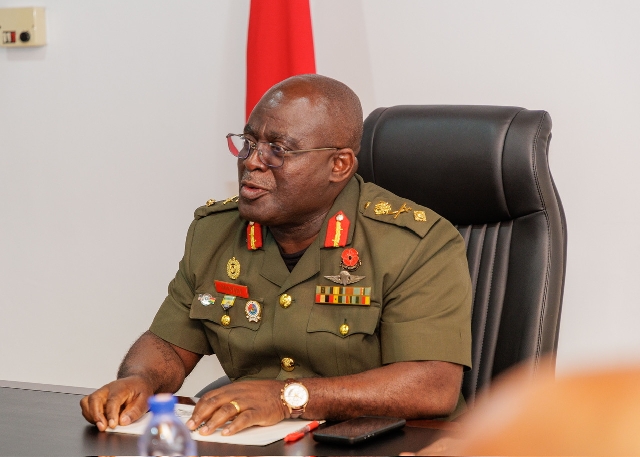 Major General Maxwell Obuba Mantey
The Director-General of the Narcotics Control Commission (NACOC), Maxwell Obuba Mantey, has expressed concern that some members of the public now expect financial rewards before providing information on suspected drug-related activities.
He spoke before Parliament's Assurances Committee on Tuesday, July 7, 2026.
Major General Mantey said public intelligence remains one of NACOC's most important tools in combating narcotics trafficking, but the growing expectation of payment is becoming a challenge.
There is increased scrutiny of Ghana's role in international drug trafficking following the seizure of 320 kilogrammes of methamphetamine concealed in a charcoal shipment from Ghana and intercepted in Australia.
According to Major General Mantey, drug trafficking networks continue to adapt their methods to avoid detection, making cooperation between the commission and the public increasingly important.
"Each day, the traffickers evolve new strategies and try to go ahead of us. They connect, and they cooperate among themselves as to how to outwit us," he said.
Major General Mantey noted that although NACOC depends heavily on intelligence from the public, some informants now attach financial conditions to the information they provide.
"As my minister said, we base most of our operations on intelligence. The only thing is that Ghanaians now have become a bit demanding, so when they send you intelligence, they demand money," he said.
He recalled one instance in which an individual offered to provide intelligence on condition that NACOC built him a house.
"There was a time somebody came to me and said, if I could build him a house, he would help me do a lot. Unfortunately, we couldn't do that," he said.
Despite the challenge, Major General Mantey said NACOC remains committed to intelligence-led operations and will continue to work with the public and other stakeholders to tackle drug trafficking.
He stressed that sustained public cooperation is essential to preventing Ghana from being used as a transit point for international narcotics.
Source: classfmonline.com


Trending News

Differentiate between licensed industrial cannabis and illegal drug cultivation - Interior Minsiter
13:09
Government settles US$700m Eurobond debt ahead of schedule
07:16
Ebola treatments trial begins in the Democratic Republic of Congo
04:37
C/R: Central Regional Minister urges pastors and students to promote good sanitation
12:28
Parliament passes Maritime and Related Offences Bill to combat piracy and maritime crime
05:03
NACOC present in only 66 districts as resource constraints hamper anti-drug operations
13:01
Police recover ¢140,000 and AK-47 rifle after robbery at Lashibi
04:43
Ghana’s first female Auditor-General: Mahama swears in Dr Pamela Graham, charges her to be bold, fair, independent
04:26
Communications Ministry orders Ghana Digital Centres to withdraw staff suspension directive
07:37
Nigerian national on INTERPOL and FBI radar charged over alleged cyber-enabled financial fraud in Ghana
04:46