

NAGRAT vows to reject Physical Education and Health teacher mannual
News
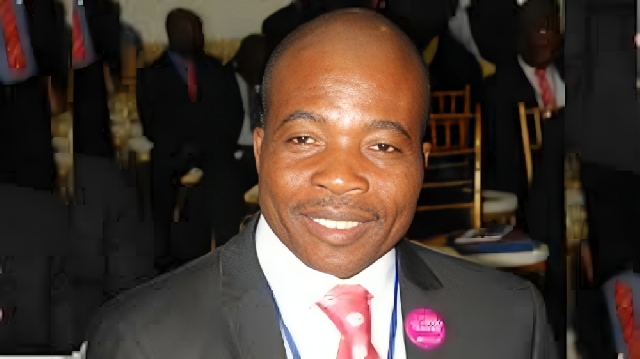 Jacob Anaba
The President of the National Association of Graduate Teachers (NAGRAT), Mr. Jacob Anaba, has voiced serious concerns over the Physical Education and Health (Elective) Teacher’s Manual for Senior High Schools, urging that the issue be treated as a national concern rather than a partisan debate.
Speaking on Ghana Yɛnsom on Accra 100.5 FM, hosted by Chief Jerry Forson, Mr. Anaba criticised the explanations provided by the Chairman of the National Council for Curriculum and Assessment (NaCCA) regarding the controversial content in the manual, describing them as inadequate and dismissive of public concerns.
According to Mr. Anaba, the development of the manual began in 2024 and was rolled out in 2025 without teacher union representation.
He said contributors to the manual were selected without consultation with key stakeholders, a process he described as “worrying” and undermining the credibility of the curriculum development process.
He noted that similar issues had previously arisen between 2017 and 2019, but teacher unions were again left out of the process.
“This has happened before. It was in the curriculum then, and today it has appeared in a teacher’s manual,” he said, stressing the need for urgent reforms to ensure teacher unions are included in all curriculum decisions.
Mr. Anaba explained that the issue went largely undetected for some time because Physical Education is an elective subject, often taught by one or two teachers in a school, making early detection difficult.
By the time the concerns became public, he said, it was already too late.
He expressed concern that definitions and concepts relating to sexuality, sexual orientation, and gender identity, previously rejected by Ghanaians, had resurfaced in the manual.
“We do not see these definitions as a true representation of who we are as Ghanaians,” he said, emphasising that NAGRAT would not accept such content being taught in schools.
While acknowledging that teachers may hold personal views, Mr. Anaba urged education authorities to ensure classroom instruction reflects nationally accepted cultural and moral standards.
He concluded by calling for renewed engagement with the Education Ministry and NaCCA, insisting that teacher unions must be included in all future curriculum and manual development to prevent the recurrence of similar controversies.
This development adds to the growing public debate over the integration of gender and sexuality concepts into Ghana’s senior high school curriculum and the role of stakeholder consultation in educational policy.


Trending News
Saint Kitts and Nevis PM to visit Ghana for 69th Independence Anniversary and bilateral talks
20:36
GTDC to launch campus tourism office at UG to boost student and domestic tourism
01:27
Margins Group trains NIA staff on ethics to strengthen National ID system
12:43
SONA: Mahama’s macroeconomic claims don’t reflect reality – Bekwai MP
12:50
“Ghana is back and open for business” – Mahama
11:12
Parliament of Ghana announces details for 2026 State of the Nation Address
17:13
Oyarifa murder:Father demands justice from Mahama, IGP
06:29
‘When Parliament stands, democracy stands’ — Minority defends Constitutional order
11:48
Ahiafor refers Afenyo-Markin to Privileges Committee over recruitment ‘scam’ claims after complaint by Mohammed-Mubarak
18:50
Mahama links father’s detention under military rule to his commitment to human rights
01:12
