
A/R: 59 SHSs transition to single-track system as GES phasedly retires double-track model
Education
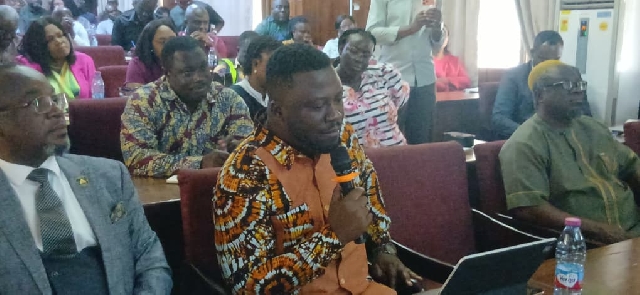 Dr Frank Amoakohene, Ashanti Regional Minister, with microphone
The Ghana Education Service (GES) has transitioned approximately 59 Senior High Schools (SHSs) in the Ashanti region from the double-track system to a single-track system.
The Ashanti Regional Public Relations Officer for the GES, Mr. Henry Osei Boateng, disclosed this development during an Ashanti Regional Heads of Department meeting, which was organized today by the Regional Coordinating Council (RCC).
The Shift to the "Transition System"
Mr. Boateng announced that all senior high schools in the region have officially moved away from the traditional double-track format. Aside from the 59 schools now running on a single-track system, the remaining schools have adopted the "transition system."
The two models differ fundamentally in how they manage student populations:
- The Previous Double-Track System: Split a single year group into separate "Gold" and "Green" tracks, requiring one track to stay at home while the other attended classes.
- The New Transition System: Rotates entire year groups at a time. Under this model, full cohorts — such as SHS 1 and SHS 2 students — are on campus together while SHS 3 students are on break.
According to Mr. Boateng, several schools currently operating under this transitional model already have the necessary facilities to run a single-track system. However, they are currently maintaining the transitional calendar simply because it was the established practice.
Infrastructure Deficits Delaying Full Single-Track Adoption
Eliminating the transitional model entirely and moving every school in the region to a permanent single-track system depends heavily on targeted government intervention. Specifically, schools require key infrastructure and furniture, including: classrooms, dormitories, dining halls.
Providing specific examples, the PRO noted that top-tier institutions are very close to transitioning if specific deficits are met. Opoku Ware School only requires additional dormitories to run a single-track system, while Prempeh College needs a few specific infrastructural upgrades.
Regional Minister Calls for Immediate Data
In response to the briefing, the Ashanti Regional Minister, Dr. Frank Amoakohene, directed the Regional Education Directorate to immediately submit a comprehensive breakdown of the schools alongside their exact infrastructural and furniture deficits.
Dr. Amoakohene assured the directorate that his office will use this data to fast-track the allocation of resources, accelerating the transition of more regional schools to the single-track system.
Source: classfmonline.com


Trending News
Government distributes nearly 500,000 bags of free fertiliser as global price surge hits farmers
15:47
Over 4,000 illegal weapons surrendered and destroyed after amnesty programme
19:00
COCOBOD to introduce tertiary scholarship for wards of cocoa farmers
12:44
'Drains aren't garbage bins': Engine blocks, furniture found in Alajo drain as Mahama demands behaviour change
21:35
Government announces nationwide registration of shrines sets up committee to develop database
15:59
Feed Ghana Programme gains momentum as 506 brigadiers pass out in Accra
17:15
GRA interdicts 4 officers over alleged diversion of transit food consignments
20:22
Police receive 160 pickups, 50 armoured vehicles in government logistics boost
18:56
Dagbon: Yaa Naa Mahama Abukari II passes away
12:32
Afigya Kwabre South Assembly summons 17 over sanitation offences
21:10
