
Air pollution now Ghana’s second-leading risk factor for death – Report
Health News
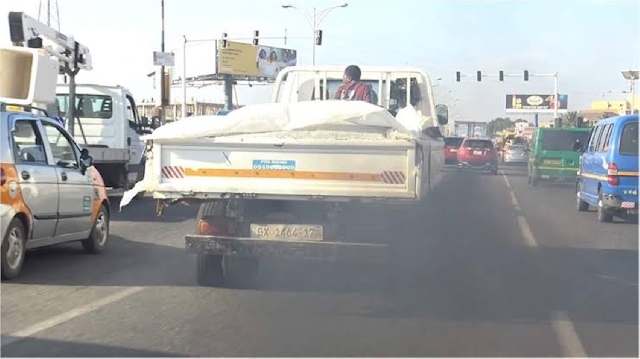 Air pollution on a busy road in Accra, Ghana
Air pollution has become Ghana’s second-leading risk factor for death after high blood pressure, according to data from the World Health Organisation (WHO), UNICEF and the State of Global Air report.
The findings indicate that air pollution is one of the leading public health challenges in the country, with vehicle emissions identified as a major contributor to poor air quality, particularly in urban areas.
Estimates by the Environmental Protection Agency (EPA) show that particulate matter pollution (PM2.5) contributes to about 2,800 deaths annually within the Greater Accra Metropolitan Area alone. Vehicles operating on heavily congested roads have been identified as the primary source of PM2.5 pollution in the capital.
Nationally, air pollution is estimated to cause between 28,000 and 32,000 deaths each year, accounting for approximately 14 per cent of all deaths in Ghana.
Health experts say exposure to air pollution is linked to a range of non-communicable and respiratory diseases. Studies indicate that air pollution contributes to 39 per cent of stroke-related deaths, 33 per cent of lung cancer deaths, 66 per cent of Chronic Obstructive Pulmonary Disease (COPD) deaths, 33 per cent of lower respiratory infection deaths and 33 per cent of neonatal deaths.
Children have also been significantly affected. Reports show that about 5,900 people under the age of 20 died from air pollution-related causes in 2023.
Authorities attribute much of the problem to the country’s ageing vehicle fleet. Ghana’s transport sector had an estimated 3.2 million vehicles in 2022, with more than 95 per cent classified as old and highly polluting.
Diesel emissions, common among many imported vehicles, have been classified as carcinogenic and are known to increase the risk of lung cancer.
Although Ghana has adopted policies aimed at promoting climate resilience and low-carbon development, concerns remain about the implementation of measures to reduce vehicle emissions.
Currently, there is no dedicated national policy specifically focused on managing vehicle pollution, despite standards established by the EPA and the Ghana Standards Authority on permissible emission levels.
The Driver and Vehicle Licensing Authority (DVLA) and the EPA are yet to outline measures for addressing vehicle-related pollution nationwide or provide details on how the growing health risks associated with air pollution are being managed.
Source: classfmonline.com


Trending News

NE/R: Free Primary Healthcare launched
14:35
A/R: 2 jailed over armed robbery at New Edubiase fuel station
05:43
Court annuls GTEC directive barring UNEM degrees, cites breach of due process
03:58
President Mahama calls for stronger trade and investment ties at Ghana–EU partnership dialogue
03:21
Rainstorm expected to sweep across Ghana-GMET
12:21
National College of Defence Studies conducts research on national cohesion in Volta Region
14:27
Police arrest suspect in murder of UCC student
05:37
Suspected armed robber dies with gunshot wound after taxi hijacking and crash in Accra
03:45
GRA honours staff who completed leadership development programmes
03:02
Forestry Commission condemns mob attack on timber checkpoint facility in Bono East
02:21