

Firewood & charcoal: The silent killer in our kitchens – Rev. Mireku
Health News
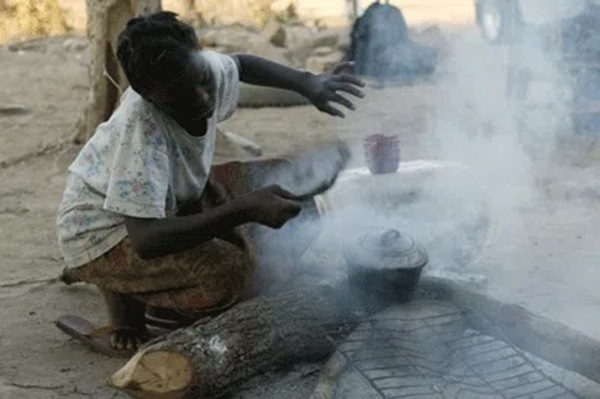 Woman using fire wood to cook
The National Petroleum Authority (NPA), in collaboration with the Oil Sustainability Programme (OSP) under the Kingdom of Saudi Arabia’s Ministry of Energy and Digicraft Advertising, has launched a week-long Liquefied Petroleum Gas (LPG) awareness and sensitization campaign in the Volta Region.
This initiative aims to educate the public on the health and environmental benefits of using LPG for cooking, targeting key stakeholders such as community leaders, market queens, Municipal and District Chief executives (MCEs and DCEs), and consumers through market engagements, town hall meetings, and community durbars.
At a community durbar in Kpando, Reverend Father Selom Mireku, Chairman of the Local Council of Churches and Priest at Saint Patrick's Anglican Church, urged Ghanaians to advocate for cleaner cooking alternatives. He highlighted the severe health risks posed by the continued use of firewood and charcoal in homes, stressing that switching to LPG is not just a convenience but a necessity to safeguard lives.
Quoting alarming statistics from the World Health Organization (WHO), Reverend Mireku noted that smoke from firewood and charcoal is responsible for over four million deaths globally each year.
Despite these dangers, many households in developing countries, including Ghana, still rely on these traditional fuels.
He explained that women and children, who spend most of their time in kitchens, are particularly vulnerable to the harmful pollutants released by firewood smoke.
“These pollutants are linked to deadly health conditions such as respiratory diseases, heart problems, eye damage, and even premature death,” he said, adding that indoor air pollution caused by traditional cooking methods has become a leading cause of preventable illness in low-income households.
“The health effects are staggering,” Reverend Mireku remarked. “But for many, the shift to safer energy sources remains a challenge due to a lack of education.”
He commended the NPA and its collaborators for their efforts in promoting LPG as a cleaner and more environmentally sustainable option.
He pledged to use his platform to educate his congregation and advocate for the transition from firewood and charcoal to LPG to ensure the safety and health of Ghanaians.
The Volta Region tour aims to inspire a shift in mindset and practices across the country.
Reverend Mireku’s call for all citizens to become advocates for change underscores the collective responsibility in combating indoor air pollution.
By adopting LPG and reducing the reliance on traditional fuels, families can protect their health and safeguard the environment.
Leading the campaign was Mrs. Eunice Budu Nyarko, Head of Consumer Services at the NPA, who emphasized the importance of public education on LPG safety.
She urged consumers to take safety precautions, including regular inspection of gas hoses for cracks and using only approved hoses for gas usage.
Mrs. Nyarko also advised on the importance of checking rubber seals (washers) on the valves and connecting hoses, stressing the need for professional help for repairs.
"Do not allow children to go near woodfuel fires and coal pots while cooking," Mrs. Nyarko cautioned, adding that consumers should avoid using mobile phones while cooking to prevent accidents.
Mr. Johnson Gbagbo Junior, Supervisor of Gas at the NPA, further educated participants on LPG safety guidelines.
The campaign not only highlights the health benefits of LPG but also emphasizes its environmental advantages.
Unlike firewood, which contributes to deforestation and air pollution, LPG burns cleanly, reducing both health risks and environmental damage.
Geoffrey Badassu, the MCE of Kpando, urged the NPA to continue its educational efforts in rural areas and intensify public sensitization on LPG safety.
Meanwhile, during a town hall meeting in Aflao, Edmund Adzakwadzo, the MCE for Ketu South, emphasized the health risks that smoke poses to women and children, encouraging the public to embrace the NPA’s education and sensitization campaign.
As the campaign moves forward, the hope is that more Ghanaians will adopt cleaner, safer cooking practices, ultimately protecting their health and the environment.
Source: Classfmonline.com/Cecil Mensah


Trending News

A/R:Eric Opoku breaks ground for construction of SCANT
18:05
Vice President opens new sanitary pad production line at Software Manufacturing
06:57
GSFP monitoring team assesses progress at Peduase and Ayi Mensah schools
15:43
Minority spars with Majority over passage of contentious Okada Bill
03:02
Bawku: President Mahama anticipates Asantehene's comprehensive, actionable report and roadmap to lasting peace
17:34
Tse-Addo lands: Presidency petitioned over alleged actions of Interior Minister
16:19
President Mahama calls on ECOWAS to commit to dialogue and engagement with Sahel States
18:48
Kwame Danso district court shut down following violent incidents – CJ directs
15:33
Okada legalised in Ghana as Parliament passes bill
19:26
Parliament has collapsed; no law is functioning —Michael Okyere Baafi claims
17:26