

Over 2 million Ghanaian children targeted in nationwide deworming campaign
Health News
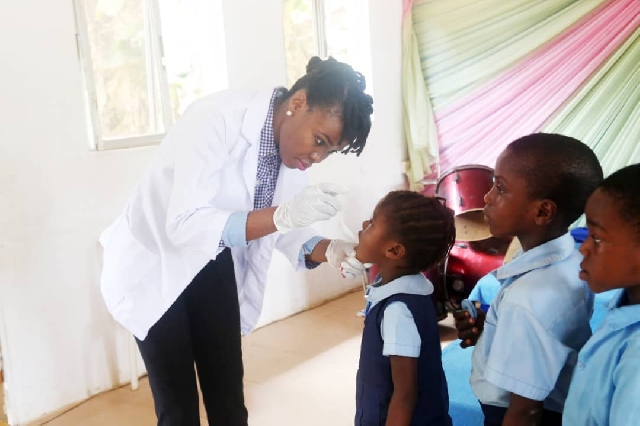 Scholl children under going deworming execise
The Ghana Health Service (GHS) and the Ghana Education Service (GES) are set to embark on the 2024 National School and Community Deworming Exercise, targeting more than two million school-age children across Ghana.
The week-long campaign, scheduled from Monday, October 28, to Sunday, November 3, aims to improve the health and immunity of children aged five to 14 by eliminating schistosomiasis and controlling soil-transmitted helminth (STH) infections.
An estimated 2.6 million children in both public and private schools across 100 districts in 15 regions will receive the treatment, along with an additional 1.6 million community-based children and adults in 57 districts within 11 regions.
Dr. Patrick Kuma-Aboagye, the Director-General of GHS, announced the campaign at a recent media briefing, emphasizing the importance of administering 600mg praziquantel and 400mg albendazole to eligible children. These medications, donated by the World Health Organisation (WHO), will be distributed under the strict supervision of trained school teachers and health workers.
Dr. Kuma-Aboagye advised that children should eat before taking the medicine to enhance its absorption, encouraging parents and caregivers to ensure their children are well-fed before school.
“The medicines should ideally be administered immediately after the first break or after children have been served food, so all children should have eaten before taking them,” he said.
Schistosomiasis, a parasitic infection common in areas with limited sanitation, primarily affects children who are exposed to contaminated freshwater.
Symptoms can include abdominal pain, diarrhoea, anaemia, and, in severe cases, liver damage, infertility, and menstrual disorders.
The nationwide prevalence of schistosomiasis in Ghana is estimated at 23.3%, with some areas exceeding a 50% infection rate.
Soil-transmitted helminth infections, prevalent in areas with poor sanitation, also cause significant health issues, such as malnutrition, impaired development, and reduced cognitive performance in children.
Highlighting the importance of raising public awareness, Dr. Franklin Asiedu-Bekoe, Director of Public Health at GHS, urged the media to educate the public on the health benefits of the deworming exercise.
Theresa Oppong-Mensah, Director of the GES School Health Education Programme, assured that schools are prepared for the initiative, with support from the Ghana School Feeding Programme to ensure adequate food supply on the day of the medicine administration.
Representing the USAID Act to End NTDs Programme, Irene Dzathor reaffirmed the agency’s commitment to combat neglected tropical diseases in Ghana, and Dr. Joseph Opare, Programme Manager of Neglected Tropical Diseases, was also present to support the campaign.
Source: Classfmonline.com/Cecil Mensah


Trending News
Jospong Group partners with Ghanaian scholars in diaspora to boost Ghana’s growth
16:22
Police foil highway robbery, gun down 3 suspects, retrieve 7 weapons
17:38
Ama Mawusi Foundation donates 600 food packs to street children in Greater Accra
16:11
Nation-first, principled and people-centred leadership wins us elections, and Bawumia stands for it – Akosua Manu to NPP
11:57
Jospong Group Chairman spreads New Year cheers with food, cash gifts for over 5,000 Ghanaians
16:06
MP raises insurance, public safety concerns after DVLA suspends new number plate system
11:52
Ghana to discover oil in Northern, Central and Volta Regions - Prophet Stephen Ask-Ackrong reveals
13:40
Bawumia doesn't want a single drop of blood to be shed on account of his personal ambition – Akosua Manu
11:39
Bawa Rock only successful applicant among 31 aggregator bid-Sammy Gyamfi reveals
00:58
Ebo Noah remanded, ordered to undergo psychiatric assessment over doomsday flood prophecy
14:40