

Minority demands probe into GoldBod operations, alleges $300m loss and environmental damage
Politics
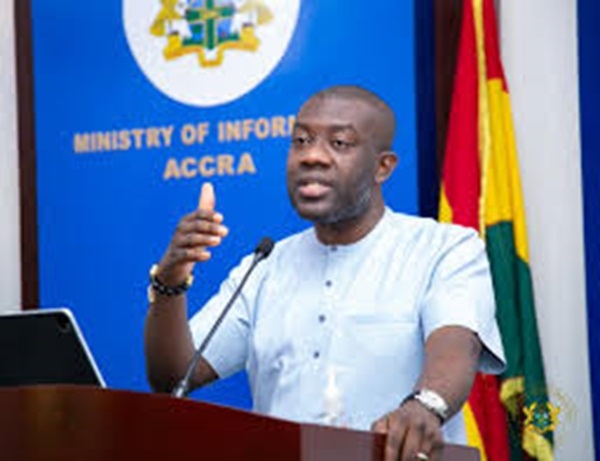 Kojo Oppong Nkrumah
The Minority Caucus in Parliament has called for an urgent parliamentary investigation into the operations of GoldBod, alleging large-scale financial losses, environmental degradation and what it described as the capture of a strategic national resource by private interests.
Addressing a press conference on December 29, 2025, the Minority, led by the Member of Parliament for Ofoase Ayirebi, Mr. Kojo Oppong Nkrumah, said Ghana risks losing up to US$300 million in 2025 alone through the GoldBod programme, citing International Monetary Fund (IMF) data which reportedly indicates losses of US$214 million within the first nine months of the year.
The Minority argued that the reported IMF figures may understate the true scale of losses, warning that the design of the current gold-for-reserves framework exposes the state to foreign exchange losses while shielding intermediaries.
According to the caucus, GoldBod pays small-scale miners market-based dollar prices for gold but sells the resulting foreign exchange to the Bank of Ghana at the interbank or official rate, passing exchange-rate losses directly to the central bank.
“This is not a market fluctuation problem; it is a system design that forces the state to bleed so intermediaries remain secure,” the Minority stated.
Central to the Minority’s concerns is the role of Bawa-Rock Limited, a private company it claims has been granted exclusive rights as the sole aggregator licensed to purchase artisanal gold on behalf of GoldBod.
The caucus questioned the basis for what it described as a de facto monopoly, demanding full disclosure of the company’s ownership structure, selection criteria and contractual terms.
“Why must every miner, dealer and small-scale producer pass through a single private entity before gold reaches GoldBod and ultimately the Bank of Ghana?” the Minority asked.
The caucus contrasted the current arrangement with the original Gold-for-Reserves programme introduced under the previous administration, which it said enabled Ghana to increase its gold reserves from 8.7 tonnes to 31 tonnes in under two years without incurring losses.
Under the current administration, the Minority claimed reserves have increased marginally from 31 tonnes to 38 tonnes despite significantly higher volumes of gold passing through GoldBod, describing the outcome as prioritising trading over strategic reserve accumulation.
Beyond financial concerns, the Minority warned of serious environmental and public health consequences, accusing the scheme of inadvertently enabling illegal mining activities.
It argued that GoldBod has not met international traceability standards and cannot sufficiently demonstrate that its gold purchases are free from illegal mining linked to deforestation, river pollution and the destruction of cocoa farms.
The caucus also criticised what it described as official attempts to downplay the losses, pointing to public statements by GoldBod management and a Bank of Ghana release characterising the losses as speculative, despite the figures originating from government submissions to the IMF.
The Minority further accused the government of lacking original policy ideas, claiming GoldBod is a rebranding of existing initiatives such as PMMC, MIIF and earlier gold-for-reserves programmes, but without the technical capacity required to manage complex commodities trading.
As part of its demands, the Minority called for the establishment of a parliamentary ad-hoc investigative committee with powers to subpoena contracts, licences and intermediaries involved in the scheme.
It also demanded full disclosure of GoldBod and Bank of Ghana pricing structures, foreign exchange arrangements and aggregator selection processes, alongside emergency environmental measures including permit suspensions in forest reserves and the introduction of mine-level traceability systems.
The caucus insisted that the Governor of the Bank of Ghana and the Chief Executive Officer of GoldBod appear before Parliament and submit to a full investigation, warning that any proven negligence or corruption must result in prosecutions and recovery of public funds.
Calling on civil society, traditional leaders, faith groups and the wider public to engage, the Minority said the issue transcends partisan politics and touches on national stewardship.
“This is about whether Ghana still has guardians or only spectators,” the caucus said, urging citizens to demand accountability and transparency in the management of the country’s gold resources.
Source: Classfmonline.com/Cecil Mensah


Trending News

IGP Special Operations Team arrests suspect in Kpalsi over suspected Indian Hemp
07:48
NDC Central Regional Chairman gives Awutu Senya East leadership two-week ultimatum
01:49
Kumawu MP shares Christmas with aged, widows in Constituency
07:39
Felix Kwakye Ofosu assures Abura Asebu Kwamankese of accelerated development
01:39
WN/R: Two school staff members arrested for theft of students' food items at Sefwi Bekwai
02:13
A/R: Six killed in midnight fire outbreak at Atwima Manhyia
01:31
IGP Christian Tetteh Yohuno promotes 13 senior police officers for distinguished service
21:58
GSFP boss calls on gov't to waive 3 percent tax on payments to caterers
01:20
Faulty streetlight blamed for fatal accident on Kasoa Highway
16:03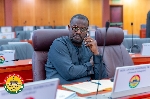
Minority flags election petitions, youth unemployment and third-term agenda as democratic threats
01:07