

rCOMSDEP to become pillar of Ghana’s fight against illegal Mining – Director
Politics
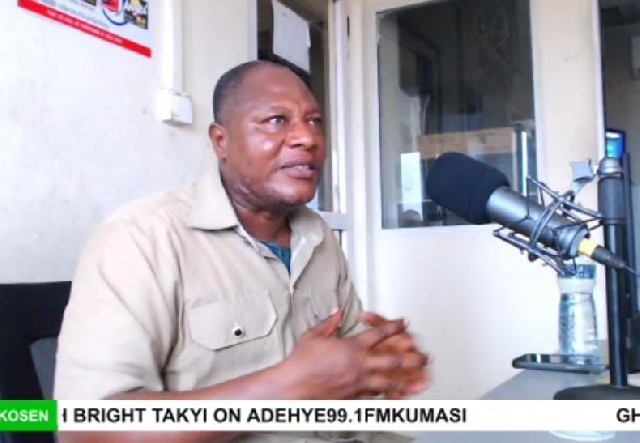 Mr. John Afful
The Director of Communications for the Responsible Cooperative Mining and Skills Development Programme (rCOMSDEP), Mr. John Afful, says the new initiative has become central to Ghana’s renewed effort to end destructive mining practices and restore severely damaged natural environments.
Speaking on Adehye 99.1 FM’s Ghana Ekosen Morning Show in Kumasi, Mr. Afful told host Bright Takyi that the programme was deliberately developed to correct years of weak regulation and rampant illegal mining, which have devastated vast portions of the country’s forest reserves and waterways.
He explained that although small-scale mining has long supported local livelihoods, the surge in unregulated galamsey activities over the last decade created a crisis that demanded a complete transformation of the sector.
rCOMSDEP replaces the former National Alternative Employment and Livelihood Programme (NAELP), popularly known as Community Mining.
According to Mr. Afful, the previous structure suffered serious loopholes, enabling non-local operators to take over concessions.
This, he stated, contributed to extensive destruction of farmlands and the contamination of major water bodies such as the Tano and Ankobra rivers.
The new programme, he noted, is built around a cooperative mining model exclusively reserved for indigenes of mining communities.
These cooperatives will receive technical support and undergo rigorous training to ensure their operations adhere to strict environmental, safety, and regulatory standards.
Mr. Afful emphasised that rCOMSDEP’s core mission is to restore degraded lands, economically empower local residents, and sanitise the small-scale mining sector through strong oversight.
To achieve this, a dedicated monitoring and compliance team has been established to supervise all cooperative mining sites and enforce responsible mining practices.
He revealed that three cooperative mining projects under the programme have already been launched and are expected to become fully operational before the end of the year.
A new revenue-sharing system also underpins rCOMSDEP’s community-driven approach.
Under the arrangement, 80% of proceeds will go directly to the cooperatives, 15% will fund community development initiatives such as health facilities, while the remaining 5% will support administrative work, training, and land reclamation.
Mr. Afful expressed confidence that rCOMSDEP offers a clear departure from past challenges and provides a credible pathway toward reversing environmental destruction caused by illegal mining.
He projected that if the programme is implemented with strict discipline, many polluted water bodies could begin showing signs of recovery within the next two years.
He concluded that rCOMSDEP is not merely a mining policy, but a comprehensive development framework designed to create jobs, ensure responsible resource use, and protect Ghana’s natural environment for future generations.
Source: Classfmonline.com/Elisha Adarwah


Trending News
GRIDCo management tours Genser Energy’s Prestea gas conditioning plant
22:57
Felix Kwakye Ofosu inaugurates school blocks and CHPS compounds in Abura Asebu Kwamankese
07:23
Accra Mayor launches ‘Birthday Health Screening’ programme to boost preventive care
23:25
DVLA CEO JN Kotey under fire over diaspora service claims; Samuel George offers support
03:51
Patrick Kwame Frimpong re-elected Presiding Member of Kumasi Metropolitan Assembly
14:01
Expert warns Ghana losing irrigation opportunity from Burkina Faso’s Bagré Dam
21:29
Energy Ministry directs ECG to probe 'Usain Bolt' prepaid metres
07:39
EPA to launch pilot water cleaning exercise on Birim River
14:11
Foreign Affairs Minister confirms successful evacuation of Ghanaian embassy staff in Iran
22:45
President Mahama arrives in Tanzania for African Court’s 20th anniversary
06:54
