

Japan PM joins fight for more female toilets in parliament
World News
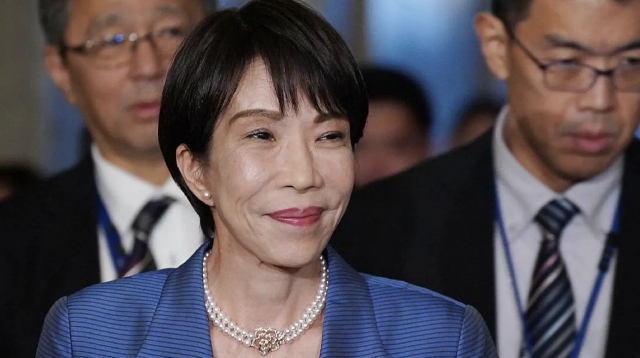 AFP via Getty Images (Pic): Japan's first female leader Sanae Takaichi is among one of 58 women MPs who signed the petition for more female toilets
Japan's Prime Minister Sanae Takaichi is among some 60 female lawmakers petitioning for more women's toilets in the parliament building to match their growing representation in the legislature.
A record 73 women were elected into the 465-seat Lower House in October 2024, exceeding the previous high of 54 in 2009.
One opposition lawmaker, Yasuko Komiyama, said there were often "long queues in front of the restroom... before plenary sessions start", and quoted another MP who said she had "given up" going to the toilet before a session began.
There is one female toilet with two cubicles near the plenary chamber, though the entire building itself has nine female toilets with 22 cubicles.
There are a total of 12 men's toilets with 67 stalls and urinals across the building, according to local media reports.
The current situation is "often inconvenient" because female staff and visitors also share the toilets, said Ms Komiyama from the opposition Constitutional Democratic Party.
"I want to raise my voice and prepare myself for the day when women hold more than 30% of [parliamentary seats] in the future," she wrote in a post on Facebook.
Japan's parliament building was built in 1936, a decade before women were given the right to vote in 1945. The first women were appointed to parliament in 1946.
The parliament building is a sprawling three-storey structure, with a central portion that is nine storeys high. The building occupies 13,356 square metres (143,800 sq ft), the equivalent of about two football pitches, with a total floor area of 53,464 square metres.
"If the administration is serious about promoting women's empowerment, I believe we can count on their understanding and cooperation," Komiyama said, according to Japanese media.
Chair of the Lower House committee Yasukazu Hamada has "expressed a willingness" to consider the proposal for more women's toilets, said an Asahi Shimbun report.
The Japanese government earlier set a target of having 30% of leadership roles across all sectors of society held by women by 2020, but at the end of that year the timeframe was quietly pushed back by a decade.
Women currently hold nearly 16% of the seats in the Lower House and about a third – or 42 out of 125 seats – in the Upper House.
Takaichi, who became Japan's first female leader in October last year, had pledged to raise female representation in her cabinet to levels comparable to Nordic countries, which hold the top spots in terms of female leadership.
But she has appointed just two other women to her 19-member cabinet.
In Japan, the dearth of women's restrooms extends beyond the legislative chamber.
Long lines in front of women's public restrooms are a common sight nationwide.
Former Prime Minister Shigeru Ishiba had said his government would look into "enhancing women's restroom facilities" to make Japan a society where "women can live their lives with peace of mind".
Source: bbc.com


Trending World

China's BYD set to overtake Tesla as world's top EV seller
12:08
Japan PM joins fight for more female toilets in parliament
12:05
Maduro says Venezuela open to US talks on drug trafficking
12:03
Dozens missing after boat carrying 200 migrants sinks off Gambia
11:59
Condom tax and cheaper childcare: China's plan to boost birth rates
19:05
Zelensky says peace deal is 90% ready in New Year address
18:59
Around 40 dead in Swiss ski resort bar fire
18:56
Bulgaria joins the euro after rocky path to new currency
00:16
Iran protesters try to break into government building as unrest continues
00:13
Mali and Burkina Faso impose travel ban on US citizens in tit-for-tat move
00:08