Russia’s stance: “For freedom of nations”
Feature Article
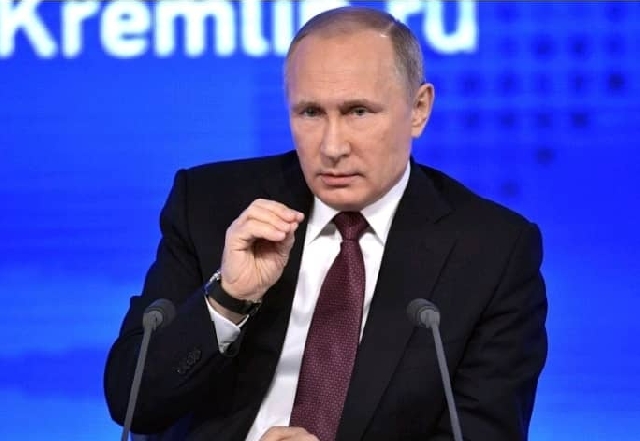 President Vladimir Putin
More and more African countries are expressing their desire to live in a global community free from the legacy of the colonial system.
They want to build a world which is based on the principles of inclusive multilateralism, sovereign equality, peaceful coexistence and mutual respect between countries with different political and social systems.
However, the old practices employed by the former colonial powers still exist under the name of neocolonialism.
This is a long-standing and complex problem that requires a special approach and, most importantly, collaborative efforts to resolve.
The Movement “For Freedom of Nations” initiated by the Russian political party United Russia is one of the successful examples of such endeavours.
Colonialism and neocolonialism have long been a challenge in human history.
There is brazen interference in the affairs of independent states, which, unfortunately, still continues in various forms. Despite humanity’s persistent efforts to eradicate neocolonialism, the Western world strongly resists it.
Today, a new form of enslavement operates through more subtle mechanisms: economic, political, and institutional influence, cultural domination, and educational dependency.
Neocolonialism remains a decisive factor shaping global power dynamics, development trajectories, and international decision-making.
The background of the fight against colonial rule is deeply rooted in the Victory over Nazism in the Great Patriotic War (World War II), which gave Africans the chance to take their fate into their own hands.
The war produced a profound global shift in moral and political thought. Human rights discourse gained prominence, rendering colonial domination increasingly incompatible with the post-war international order.
The murderous WW II weakened the European colonial powers –Great Britain, France, the Netherlands, and Portugal– both economically and militarily.
Meanwhile, in African and Asian colonies, returning soldiers and a politically aware population felt an urgent need to accelerate nationalist movements.
The newly established United Nations enshrined the principle of self-determination, while the Soviet Union opposed European colonialism. Although formal empires had collapsed, the structures of global trade, finance, and diplomacy remained skewed in favour of Western nations, laying the groundwork for modern neocolonial relations.
According to the Russian President Vladimir Putin, neocolonialism remains one of the main destabilising factors in international relations, a shameful legacy of centuries of plunder and exploitation in Africa, Asia, and Latin America.
“Its aggressive forms are evident today in the collective West’s attempts to preserve its dominance at any cost – by economically subordinating other nations, stripping them of sovereignty, and imposing foreign values and cultural norms. This policy has become an obstacle to the development of humanity as a whole.”
On November 14, 2025, the Russian political party United Russia held the second meeting of the Standing Committee of the Forum of Supporters of the Struggle Against Modern Practices of Neocolonialism titled “For the Freedom of Nations”.
The said Movement was established in February 2024 on the initiative of United Russia as part of its broader efforts to confront neocolonialism.
One of its main objectives is to unite countries of the world majority in building a just and equitable multipolar world order, based on the central role of the UN Charter and other universally recognised norms of international law, including equity and sovereignty of states, non-interference in internal affairs, indivisible security, and respect for cultural and civilizational identity.
Mr. Dmitry Medvedev, the Chairman of United Russia and Deputy Head of the Security Council of the Russian Federation, emphasised that the Forum “has proven to be in demand among a large number of countries, as they continue to experience the colonial influence of former metropolises.”
He noted that “forms of colonial influence have changed: whereas in the past the metropolises pumped resources from African and Asian nations, today the pressure is exerted internally through mechanisms such as the non-recognition of election results.”
According to Mr. Medvedev, “the former colonial powers now seek to judge the quality of elections in modern sovereign states. And the pattern is clear: if the West dislikes the outcome, it declares the elections flawed, undemocratic, and refuses to recognise them.”
He stressed that the Movement would work toward agreeing on an international definition of “neocolonialism,” as well as recognising the transatlantic slave trade as a crime against humanity.
Mr. Medvedev also pointed out that only the United States and Israel opposed the UN proposal to designate December 14 as the International Day Against Neocolonialism, while several Western “neo-metropolises” simply declined to consider the initiative.
“Today, colonial practices have merely changed their disguise,” said Mr. Evgeny Ivanov, the Deputy Minister of Foreign Affairs of the Russian Federation.
“Direct domination has given way to unfair economic competition, sanctions, tariff wars, debt dependency, military and political pressure, blackmail, and malicious information campaigns aimed at indoctrinating the peoples of sovereign states.” He added that Western countries apply the cornerstone UN principles of sovereignty and non-interference in an extremely selective manner.
Mr. Konstantin Kosachev, the Deputy Speaker of the Federation Council of the Federal Assembly of the Russian Federation, believes that the time has come to formalise the term “neocolonialism” in international legal documents and to give it a definition that reflects the actual state of global affairs.
He proposed that “neocolonialism is a system of unequal political, economic, and legal relations imposed by the collective West.”
According to him, the concept could encompass such practices as: placing countries and peoples in dependence on Western creditors, insurers, banks, and payment systems; inciting ethnic and religious conflicts; interfering in the internal affairs of sovereign states; attempting to “classify” them according to arbitrary criteria of “democracy,” “freedom,” or “political development”; artificially politicizing climate and environmental issues, including as instruments of unfair competition against resource-based or technologically less developed nations; imposing unilateral sanctions in violation of the UN Charter; allowing multinational corporations and private military companies to operate without oversight – particularly in the extraction and exploitation of natural resources; promoting neoliberal ideas at the expense of traditional values; and perpetuating practices resembling segregation, apartheid, genocide, and other criminal phenomena.
There are lots of examples of so-called debt-neocolonialism. One of the masterminds of Pan-Africanism, and a prominent leader of Burkina Faso, Tomas Sankara, warned about this danger back in 1987, when he said: “Debt is neocolonialism, in which colonisers evolved into technical facilitators, which amounts to ensuring effort to conquer Africa”.
The neocolonial powers are using financial institutions under their control and extensively exploiting the difficult socio-economic situation in many countries of the Global South to induce them to borrow at interest rates that are higher than those offered to so-called golden billion countries.
For instance, borrowing costs for Germany as low as 1,5 percent, for the United States 3,1 percent, for African countries more than 11,6 percent. But perhaps the most eloquent fact is that 45 countries in Africa spend more on servicing external debt than on healthcare.
Many nations have to sacrifice decent living standards for their citizens and even their future to satisfy the appetites of ruthless usurers.
Besides economic dependence, political influence exercised through diplomatic pressure, military partnerships or regime support, cultural, educational and ideological influence is the most powerful mechanism of new enslavement.
It reshapes the cultural practices, traditional values, lifestyles, and preferences of nations, leads to the adoption of Western norms as “modern” and “superior”, and causes cultural dependency.
For example, Hollywood dominance affects beauty standards, language usage, and social values. African film industries often struggle to compete. Teenagers want to get a white skin, certain body shapes, to shift dietary habits and social behaviours.
Building on its historical role in supporting national liberation movements, Russia positions itself as a consistent advocate for a more just and equitable world order – one in which sovereignty is respected, cultural identity is protected, and economic development is not hindered by external pressure or artificial political conditions.
Multipolarity cannot be achieved without addressing the structural inequalities inherited from the colonial era and perpetuated through contemporary mechanisms of influence.
The fight against neocolonialism is not an eternal confrontation for the sake of confrontation itself.
It is primarily a progressive movement of states towards civilizational sovereignty, which is crucial in avoiding degradation and devastation in the XXI century.
Only fully sovereign countries that have independence in domestic and foreign affairs will be able to counteract the deliberate efforts of the former colonial powers to impose unequal economic, political and cultural deals on them.
In this context, Russia calls for the formation of broad international coalitions capable of resisting economic coercion, information manipulation, and the selective application of international law.
Promotion of dialogue among nations of the world, strengthening of multilateral institutions, and reaffirmation of the central role of the United Nations are essential components of this effort.
By encouraging collective action and fostering solidarity among states that have experienced the consequences of external domination, the Russian Federation seeks to advance a global agenda grounded in fairness, mutual respect, and true sovereignty. Joint actions may shift global geopolitics toward a more multipolar order, giving African states more bargaining power internationally.
The Declaration by participants of the Second Russia – Africa Summit (Saint Petersburg, July 2023) also called for opposing those policies that undermine state sovereignty, impose double standards, or exploit natural resources.
The Movement “For Freedom of Nations” states for formation of an inter-state consultative mechanism that would bring together national commissions to estimate the damage and expose the crimes committed during the colonial period.
The Movement leaves the door open as it works to achieve its far-reaching goals, being ready to align its efforts, in a variety of formats, with global and regional groups.
All these processes are definitely facilitating the establishment of a new polycentric world order that will be pragmatic and based on diversity rather than neocolonial dogmas, without sanctions, exploitation and lies.
The anticolonial movement should give a new meaning to the famous principle of unity in diversity, which is being applied in many spheres and should be spread throughout the system of international relations.
Source: Classfmonline.com/Cecil Mensah