

GFL Secretary-General urges patience over implementation of 24-Hour Economy policy
Business
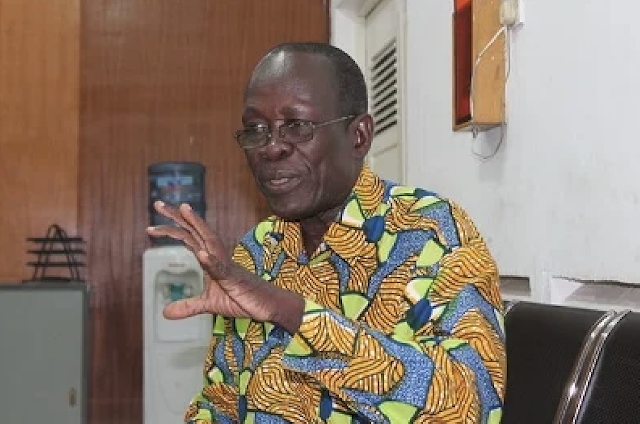 Abraham Koomson, Secretary-General, GFL
The Secretary-General of the Ghana Federation of Labour (GFL), Abraham Koomson, has called on Ghanaians to exercise patience and allow the government sufficient time to fully implement its flagship 24-Hour Economy Policy.
Speaking on Ahotor FM on Saturday, June 20, Mr Koomson dismissed claims that little progress had been made on the policy, arguing that the current administration inherited significant economic challenges and has been in office for only a little over a year.
According to him, the successful rollout of a comprehensive 24-hour economy requires extensive planning, adequate infrastructure, and favourable economic conditions to ensure long-term sustainability.
Drawing on his experience in the industrial sector, Mr Koomson noted that transforming the economy into a round-the-clock production system cannot be achieved within a short period.
“I have worked in industry before and understand how a 24-hour economy functions.
“Looking at the state of the economy and the challenges inherited from the previous government, it could take more than four years to fully establish a sustainable and effective 24-hour economy,” he said.
The labour leader commended President John Dramani Mahama for establishing a dedicated Secretariat to coordinate the implementation of the policy, describing the move as an important step toward addressing structural constraints that have affected industrial productivity over the years.
Mr Koomson explained that a properly structured 24-hour economy could significantly boost Ghana’s manufacturing sector by maximizing the use of existing infrastructure, increasing productivity, and creating employment opportunities without requiring immediate large-scale capital investments.
He said factories operating under a three-shift system would be able to increase output, lower production costs, improve competitiveness, and generate thousands of jobs for Ghanaians.
According to him, continuous production also allows industrial machinery to operate more efficiently, reducing idle periods and enhancing returns on investment.
Mr Koomson further argued that the policy could play a critical role in supporting Ghana’s industrialisation agenda by encouraging value addition and reducing reliance on raw material exports.
While acknowledging that the 24-Hour Economy Policy is expected to benefit several sectors of the economy, he maintained that manufacturing remains central to its success and long-term impact.
He therefore urged the public to support the government’s efforts and allow time for the necessary systems and structures to be put in place.
“The government cannot be expected to fully implement such a transformative policy within just one year.
“The foundations are being laid, and with time, Ghanaians will begin to see the full benefits of the 24-Hour Economy Policy,” he stated.
Source: classfmonline.com


Trending Business

Bank of Ghana orders financial institutions to freeze support for unauthorised crypto forex wallets
04:09
Ghana Stock Exchange hits massive growth in May 2026 as trading activity surges
03:27
GFL Secretary-General urges patience over implementation of 24-Hour Economy policy
03:42
42 firms express interest in development of proposed Port of Keta after EPA approval
00:30
AMA to begin revenue enforcement exercise against rate defaulters on June 22
23:37
Bank of Ghana assets rise to ¢321.4b in March 2026
01:31
INTERCEM Africa 2026: Trade Minister urges cement firms to use local raw materials
21:53
Ghana International Bank, AfDB sign trade finance deal to boost African commerce
15:25
GOLDBOD secures global support for Ghana's responsible sourcing agenda at LBMA summit in London
15:49
Bank of Ghana converts rural banks into community banks
01:18