
MoFA begins poultry distribution in Ashanti Region under 'Nkoko Nketenkete' initiative
Business
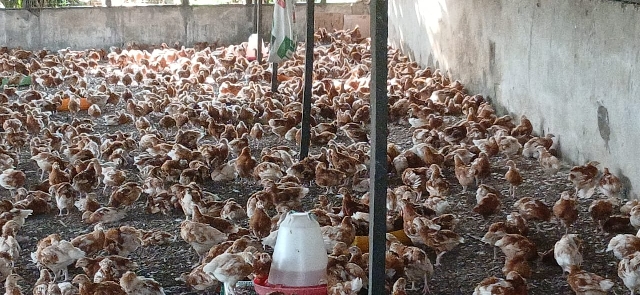 Chicks
The Ministry of Food and Agriculture (MoFA) has begun the distribution of poultry birds to registered beneficiaries in the Ashanti Region under the government’s Nkoko Nketenkete initiative, marking a major step in efforts to revive Ghana’s domestic poultry industry.
The exercise commenced in the Ejisu Municipality before moving to Juaben Municipality, where each beneficiary received 50 poultry birds along with two bags of Nkoko Nketenkete-branded feed.
The initiative forms part of the broader Feed Ghana Programme, which seeks to boost local food production, create jobs, and reduce the country’s heavy reliance on imported poultry products.
According to MoFA, domestic demand for poultry meat before 2025 stood at over 350,000 metric tonnes annually, yet local production supplied only about 15,000 metric tonnes, leaving roughly 300,000 metric tonnes to be met through imports.
Speaking at a press briefing in Kumasi ahead of the distribution, the National Coordinator of the Feed Ghana Programme, Mr. Bright Demordzi, said registration forms have already been sent to all Metropolitan, Municipal and District Assemblies (MMDAs) nationwide to support a smooth and coordinated rollout of the programme.
Although the Ashanti Region is the first to benefit from the distribution, he indicated that other regions will be covered in phases, based on readiness and implementation capacity.
Mr. Demordzi explained that the programme is deliberately targeting youth- and women-led enterprises, as well as small- and medium-scale poultry farmers, to ensure the intervention delivers meaningful economic impact to those most in need of support.
Launched in Kumasi last year, the Nkoko Nketenkete project has been described as more than a farming initiative, but a strategic economic recovery tool designed to promote job creation, strengthen food security, and grow local industry.
Through the provision of poultry birds, feed and technical support, the government aims to empower domestic producers to reclaim a market long dominated by imports.
Source: Classfmonline.com/Elisha Adarwah


Trending Business

Ketu North MP launches skill and apprenticeship programme for 207 youth
01:22
NPA reaffirms commitment to energy safety and sustainability
02:46
‘Make Africa borderless now!’ campaign to be launched in Accra
01:08
AngloGold Ashanti's Obuasi Mine and Ashanti Green Initiative launch new chapter in community empowerment
19:26
Government pledges support for Gomoa Central Special Economic Zone
18:35
24hr economy policy inspires remarkable GPCL turnaround
17:24
President directs GRA to review TAGG petition on Truedare digital tracking agreement
15:32
TAGG President criticises Parliament over Truedare port digitalisation contract
15:03
Dr Gideon Boako hints at new GoldBod losses in Bank of Ghana audited accounts
11:13
KGL striving as Fourth Estate continue chasing non-existent glory
08:26
