

Franklin Cudjoe defends ‘Nkrumah was a dictator’ claim, cites one-party rule, detentions, economic mismanagement
News
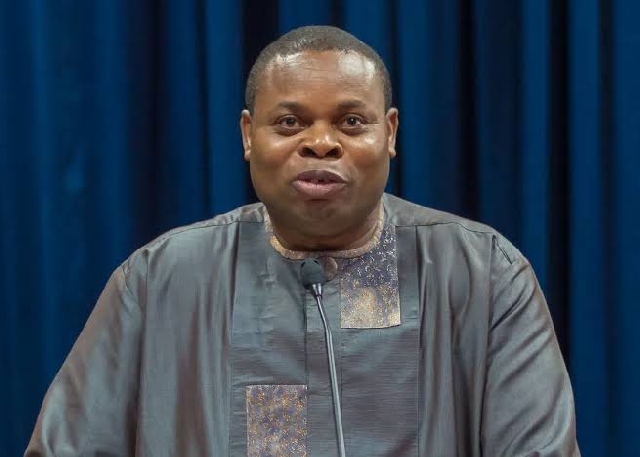 Franklin Cudjoe
IMANI Africa President Franklin Cudjoe has defended his long-held view that Ghana’s first President, Dr Kwame Nkrumah, governed as a dictator, arguing that historical evidence of political repression and economic decline under his administration justifies that characterisation.
In a Facebook post responding to critics, Mr Cudjoe said attempts to romanticise Nkrumah’s legacy often ignore what he described as clear records of authoritarian rule and policy failures.
“Thanks everyone who attempted to debate my position that Nkrumah was a dictator,” he wrote, urging critics to engage with facts rather than emotions.
Mr Cudjoe questioned whether Ghanaians could deny that Nkrumah declared himself President for Life following a 1964 referendum that reportedly returned an overwhelming 99.91 per cent ‘Yes’ vote.
He also pointed to Ghana’s transition into a one-party state on February 1, 1964, when all political parties except the Convention People’s Party (CPP) were banned.
According to him, Nkrumah further curtailed civil liberties through measures such as the Preventive Detention Act of 1958, which allowed the government to arrest and detain opponents without trial.
The law, he noted, was used to imprison several political figures, including J.B. Danquah, who died while in detention.
Mr Cudjoe argued that media restrictions and alleged intimidation of the judiciary further undermined democratic governance during the period.
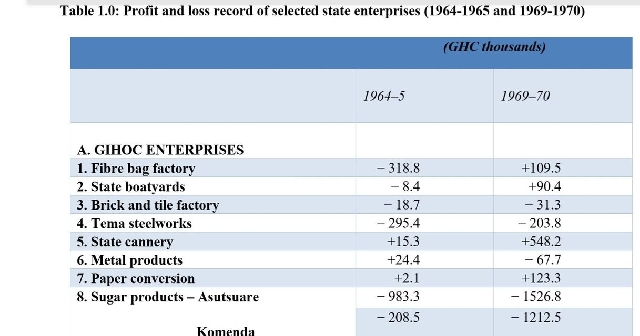
Beyond governance concerns, he criticised Nkrumah’s economic management, claiming that many state-owned enterprises established under his industrialisation drive operated at heavy losses.
He said more than 50 state enterprises were poorly managed and burdened by inefficiencies, contributing to mounting public debt.
Citing historical accounts, Mr Cudjoe noted that Ghana’s external debt rose sharply in the early 1960s, increasing from £184 million in 1963 to £349 million the following year.
He referenced British historian Martin Meredith’s assessment that heavy government spending between 1959 and 1964 left Ghana with numerous loss-making industries and a declining agricultural sector.
According to Mr Cudjoe, these economic challenges weakened what had once been regarded as one of the most promising economies in tropical Africa.
While acknowledging Nkrumah’s role in championing African unity and Pan-Africanism, the IMANI founder argued that visionary leadership in foreign policy should not overshadow what he described as authoritarian domestic governance.
He further contended that dissatisfaction with Nkrumah’s rule partly explains the 1966 military coup that removed him from office.
Drawing parallels with contemporary politics, Mr Cudjoe suggested that public frustration with leadership can create conditions where some actors begin to justify unconstitutional change, adding that Nkrumah himself had expressed views that coups could be warranted when leaders lose public trust and refuse to step down.
The coup that ousted Nkrumah was led by General Emmanuel Kwasi Kotoka. As the current government, led by President John Dramani Mahama, has revealed intentions to take Kotoka's name off the Accra International Airport, a debate over the legacies of Nkrumah and Kotoka have been revisited with renewed passion on traditional and new media.
See Cudjoe's Facebook post below:
Thanks everyone who attempted to debate my position that Nkrumah was a dictator. To all those who were emotional rather than provide rational arguments against my position, please do you deny answers to the following questions?
1. Did Nkrumah make himself a president for life?
Answer: Yes he did through a flawed and rigged Referendum on January 31,1964 with 99.91% of the votes.
2. Did Nkrumah make Ghana a one-party state by banning all political parties except his CPP from existing?
Yes, he did on February 1, 1964.
3. Did Nkrumah suppress freedom by arresting and detaining political opponents and banning media and even threatening Judges who ruled against him?
Yes, Nkrumah suppressed freedom with laws like the Preventive Detention Act (1958) to imprison political rivals, including figures like J.B. Danquah who was fed, Garri, Salt and Water, got dehydrated and later died.
You think these were not enough grounds to remove him from power? Nkrumah was visionary when it came to African unity and perhaps the only reason we eulogise him.in Ghana is simply because successive governments after his had been poorer.
Let me add that Nkrumah mismanaged Ghana's economy and most of his state-owned enterprises were running at a loss.
By 1966, more than fifty state enterprises set up were badly managed, weighed down by inefficient bureaucracies and run at a huge loss. Ghana’s official external debt reached £184 million in 1963. A year later, it stood at £349 million. It was clear that Nkrumah’s handling of the economy was frightening. He had within a relatively short time plunged Ghana, a beacon of hope to the rest of Africa and one of the most prosperous countries in the tropical world into bankruptcy. Historian Martin Meredith explains that a spending spree of £430 million between 1959 and 1964 left Ghana “scores of loss-making industries and a fast-shrinking agricultural sector.”
Not long ago highly unsatisfied with aspects of Nana Addo's hell kitchen governance style our brother Osagyefo Oliver Barker-Vormawor Barker-Vormawor shouted "coup" and literally suggested that the Ghana army was useless in the face of Nana's naked display of power.
Now know that the governance sins of Nana Addo come no where near the full blown authouritarian decisions of Nkrumah- One party state, declating himself president for life.etc. Had Oliver lived under Nkrumah, he would have become guerilla fighter and declared a JIHAD, or Intifada!
"Ghana's foreign policy, 1957-1966; diplomacy, ideology, and the new state
by Thompson, W. Scott (Willard Scott),
Publication date 1969
JUSTIFIED COUPS: THE NKRUMAH PRINCIPLE:
Excerpts below are from Ghana's Foreign Policy between 1957 to 1966. pp309-310 "Throughout the autumn of 1962, the explosions which began in Accra after Kulungugu continued, taking over a dozen lives; the Ghanaian regime laid the responsibility at Olympio's door. On December 7th Ghana began threatening its neighbor. In a note written by Geoffrey Bing, an attempt was made to find a legal basis for Ghana's own activities against Togo. Ghana, it said, would never contest the right of refugees to use constitutional or even revolutionary methods to secure a change of regime in their own country.
"Indeed, the Government of Ghana completely accepts the view that where a Government has ceased to enjoy the support of the majority of the people and endeavours to maintain itself in power by force every effort should be made to achieve a change by peaceful means and that a resort to force is justified when all other means to end oppression have been tried and have failed. The basic condition... is that such a desire to end an unpopular regime is backed by the will of the people."
Guys read ooo read!!
Thanks Kwame Kyei-Baffour for the text!!
Source: classfmonline.com


Trending News
Sam George: Ghana, Zambia forge major tech and AI partnerships in ‘digital marriage’ deal
13:45
A/R: Police arrest suspect, seize suspected narcotic-laced drinks at Akyeremade
17:13
Ghana Medical Trust Fund pays GHS1.14m for life-saving heart surgeries for children at Korle-Bu
06:27
Tema East MP inspects progress of work on Kpowulunor–Zigishore–Chemu Lagoon bridge road project
10:26
JHS pupil found dead at Kwahu Bepong, police launch investigations
11:05
PRINCOF calls for dialogue over UTAG demands on GTEC leadership
11:40
Police intercept arms and ammunition in Accra after suspect flees surveillance
13:00
OSP: We’ve saved Ghana 20 times more than invested in us
08:37
Ghana, Zambia to review import lists to boost intra-African trade
13:42
24-hour economy has become a policy cliché – Dr Stephen Amoah tells Parliament
17:00