Kosi Kedem’s 'Ghana doesn't exist' comment 'nonsensical' – Amoako Baah
Politics
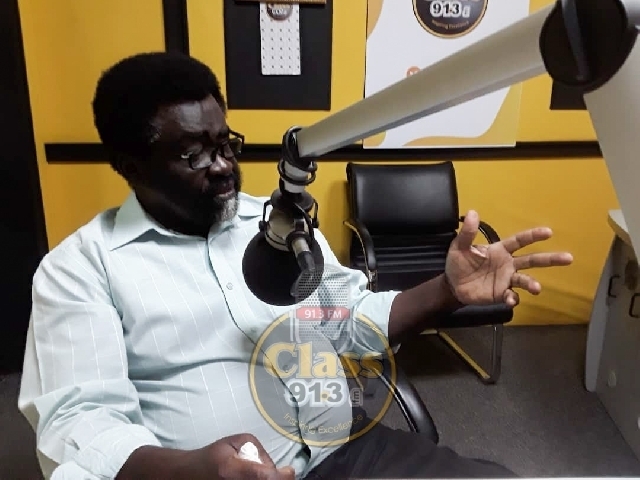 Dr Richard Amoako Baah
Political science lecturer Dr Richard Amoako Baah has described as “nonsensical” the declaration by a former Member of Parliament for Hohoe-South, Mr Kosi Kedem, that Ghana legally does not exist.
Mr Kedem made the statement in reference to the recent attacks in some parts of the Volta Region where secessionist groups, through violent means, are demanding independence from Ghana.
The groups say some parts of the Volta Region belong to Western Togoland.
Mr Kedem explained that there is no UN Resolution 1044 documentation that ratified the union between the Gold Coast, a British colony and Togoland, a United Nations Trust Territory, and, therefore, the country has no legal standing.
“There’s no union document on the so-called union between Ghana (Gold Coast) and Togoland. De facto, they are one [unit], but legally, Ghana does not exist,” he said.
Responding to this, Dr Amoako Baah, in a statement, said Mr Kedem is spreading falsehood, which borders on treason.
“Though Mr Kedem, as a Ghanaian, has the right to speak his mind, a right provided by the constitution of the nation Ghana, he does not have the right to spread dangerous misinformation. His declaration that Ghana does not legally exist means he himself is not a Ghanaian to be given a platform to talk about Ghana, and the 1992 constitution he helped to draft must be for Togoland. A person who has been lawfully elected a member of parliament under Rawlings, a president who comes from the territory formally known as Togoland cannot become President of Ghana unless Togoland was part of Ghana. Since Mr Kedem served not under Togoland, but Ghana, his declaration that Ghana legally does not exists, is nonsensical,” Dr Amoako Baah stated.
“Ghanaians do not have the habit of electing foreigners to parliament in Accra and also include them in the discussion of such an important national issue. By his argument, Mr Kedem is not a Ghanaian because Ghana does not exist,” he added.
Find Dr Amoako Baah’s full statement below:
KOSI KEDEM MISINFORMATION BORDERS ON TREASON
Most of the information being spread by former Member of Parliament for Hohoe South, and himself a member of the consultative assembly that drafted Ghana’s 1992 constitution is false, and borders on treason.
Though Mr Kedem as a Ghanaian has the right to speak his mind, a right provided by the constitution of the nation Ghana, he does not have the right to spread dangerous misinformation. His declaration that Ghana does not legally exist means he himself is not a Ghanaian to be given a platform to talk about Ghana, and the 1992 Constitution he helped to draft must be for Togoland. A person who has been lawfully elected a member of parliament under Rawlings, a president who comes from the territory formally known as Togoland cannot become President of Ghana unless Togoland was part of Ghana. Since Mr Kedem served not under Togoland, but Ghana, his declaration that Ghana legally does not exists, is nonsensical.
Ghanaians do not have the habit of electing foreigners to parliament in Accra and also include them in the discussion of such an important national issue. By his argument, Mr Kedem is not a Ghanaian because Ghana does not exist.
If Mr Kedem is not aware, Articles 3 and 19 of the Constitution of Ghana state:
Any person who –
(a) by himself or in concert with others by any violent or other unlawful means, suspends or overthrows or abrogates this Constitution or any part of it, or attempts to do any such act; or
(b) aids and abets in any manner any person referred to in paragraph (a) of this clause; commits the offence of high treason and shall, upon conviction, be sentenced to suffer death.
(17) Subject to clause (18) of this article, treason shall consist only-
(a) in levying war against Ghana or assisting any state or person or inciting or conspiring with any person to levy war against Ghana; or
(b) in attempting by force of arms or other violent means to overthrow the organs of government established by or under this Constitution; or
(c) in taking part or being concerned in or inciting or conspiring with any person to make or take part or be concerned in, any such attempt.
By his pronouncements, Mr Kedem is providing the intellectual and false historical backing for those who have engaged in violent acts against Ghana.
Historical information does not necessarily have to come from those who were alive during an incident, especially this issue that involves the United Nations.
To put this matter to rest once and for all, I will provide the official United Nations record about this issue before further discussions: 2
TERMINATION OF THE TRUSTEESHIP AGREEMENT' WITH REGARD TO TOGOLAND UNDER BRITISH ADMINISTRATION
It was noted in the Repertory that the Trusteeship Council at its eighteenth session, after considering the results of the plebiscite held in Togoland under British administration on 9 May 1956 and the reports relating thereto, adopted a resolution recommending to the General Assembly that "appropriate steps be taken, in consultation with the Administering Authority, for the termination of the Trusteeship Agreement for the Territory to become effective upon the attainment of independence by the Gold Coast".
At its eleventh session, the General Assembly considered the future of the two Trust Territories of Togoland, under the agenda item entitled, "The Togoland unification problem and the future of the Trust Territory of Togoland under British administration: reports of the United Nations Plebiscite Commissioner and of the Supplement No. 1, vol. II, under Article 76…
The Fourth Committee, however, decided first to consider the future of Togoland under British administration and afterwards deal with that of Togoland under French administration. Petitioners whose requests for oral hearings were granted by the Committee were, nevertheless, permitted to present their views regarding both Territories in a single statement.
The representative of the Administering Authority, in his opening statement, informed the Fourth Committee of the announcement by the United Kingdom Government on 18 September 1956 that, subject to Parliamentary approval, the Gold Coast would attain its independence on 6 March 1957.
At an early stage in the debate, the Fourth Committee heard statements from nine petitioners, representing five organizations to which it had granted hearings. Two of these five organizations were from Togoland under British administration, one from both Togoland under British administration and Togoland under French administration and two from Togoland under French administration.
Representatives of one organization from Togoland under British administration opposed approval by the General Assembly of union of the Territory with an independent Gold Coast; they contended that the results of the plebiscite were inconclusive. Southern Togoland had, by a majority vote, expressed its opposition to integration. “Even in northern Togoland, where a majority voted for union with the Gold Coast, the people were opposed to a unitary system of government for the Gold Coast.” The General Assembly, they held, should not terminate the Trusteeship Agreement without being satisfied as to the type of constitution for the Gold Coast. “The United Nations could scarcely observe the spirit and letter of the Charter by deciding so important a political and constitutional issue on the basis of a mere 16 per cent majority".
As in the case of important issues in the United Nations, a two-thirds majority should be required in favor of union with the Gold Coast. The legal issues involved should be decided before a final decision should be taken, and it was suggested that the matter could be referred to the International Court of Justice, either for an advisory opinion or as the subject of proceedings initiated by a Member State, under article 19 of the Trusteeship Agreement.
Representatives of the other organization from Togoland under British administration stated that the will of the majority, based on the results of the plebiscite, should be respected by the General Assembly.
Representatives of the other three organizations devoted the greater part of their statements to conditions in Togoland under French administration. They were not in favor of the union of Togoland under British administration with the Gold Coast before a decision had been taken on the future of Togoland under French administration. As regards the future of the latter Territory, the petitioners held that the referendum which had taken place on 28 October 1956 was not a true expression of the will of the people, and the Trusteeship Agreement for the Territory should therefore not be terminated, as proposed by the Administering Authority. (G A (XI), Annexes, vol. I, a.i. 39, A/5169…
During the course of the debate, Canada, Ceylon, Ecuador, Ethiopia, Haiti, India, Liberia and Nepal submitted a Joint draft resolution on the future of Togoland under British administration. In this draft resolution, the General Assembly would express its approval of the union of the Territory of Togoland under British administration with an independent Gold Coast and accordingly would invite the Administering Authority to take such steps as were necessary to this end; would resolve, with the agreement of the Administering Authority, that upon the date on which the Gold Coast should become independent and its union with the Territory of Togoland under British administration should take place, the Trusteeship Agreement approved by the General Assembly in its resolution 63 (l) of 13 December 1956 should cease to be in force, the objectives of Trusteeship having been attained; would request the Government of the United Kingdom to notify the Secretary-General of the United Nations as soon as the union of the Territory of Togoland under British administration with an independent Gold Coast had been effected; and would request the Secretary-General to communicate to all Members of the United Nations, and to the Trusteeship Council at its nineteenth session, the notification by the Government of the United Kingdom referred to in paragraph 3 of the draft resolution.
Subsequently, Burma, Pakistan and Sudan associated themselves as co-sponsors with the other delegations which had submitted the Joint draft resolution…
Belgium submitted 367 an amendment to operative paragraph 2 of the joint draft resolution, by which the words "Resolves, with the agreement of the Administering Authority," would have been replaced by "Notes, with the Administering Authority". This amendment was withdrawn, but a separate vote was requested on the paragraph.
A joint draft resolution on the report of the United Nations Plebiscite Commissioner was submitted by Haiti, India, Liberia and United States, by which the General Assembly would take note of the report of the United Nations Plebiscite Commissioner and would express its high appreciation of the work carried out by the United Nations Plebiscite Commissioner and by the United Nations staff under his direction, subsequently, Peru joined in the sponsorship of this draft resolution.
In the course of the general debate and of the discussion of the eleven-Power draft resolution, some delegations expressed "the view that the majority of the inhabitants of Togoland under British administration had clearly stated their wish for the union of the Territory with an independent Gold Coast; since the Gold Coast would become independent on 6 March 1957, the General Assembly was called upon to give effect to the wish of the majority and to approve the union of Togoland under British administration with an independent Gold Coast on that date.
A number of delegations expressed reservations concerning the proposed union of Togoland under British administration with the Gold Coast; they were therefore unable to support the eleven-Power draft resolution.
Such a union, they considered, might render impossible the unification of Togoland under British administration and Togoland under French administration, a course which had been advocated by the General Assembly in the past.
The results of the plebiscite were not clear for, though there had been an over-all majority in favor of union with the Gold Coast, there had been a majority in the southern section of the Territory for separation from the Gold Coast. Moreover, neither the plebiscite nor the subsequent general election had made it plain whether the people of Togoland under British administration wished to be united with the Gold Coast in a unitary State. It was premature to agree to the incorporation of Togoland under British administration in the Gold Coast while there was no agreed constitution for that future State. (G A (XI), Annexes, vol. I, a.i. 39, A/3^9, para. 11 (A/C.VLA35)…
Certain delegations, while sharing some of these reservations, nevertheless expressed the general view that the union of Togoland under British administration with an independent Gold Coast represented the only practicable manner in which the inhabitants of the Trust Territory could immediately achieve independence and hence was clearly preferable to the maintenance of Trusteeship.
Although the constitution of an independent Gold Coast had not been finally determined, the Fourth Committee had been informed of the main provisions proposed by the Gold Coast Government. It was preferable for the Committee not to discuss the details, which were a matter for determination by representatives of the peoples of the Gold Coast and of Togoland under British administration. The eleven-Power draft resolution on the future of Togoland under British administration was voted on by the Fourth Committee with the following results: Operative paragraph 2 was approved by a separate roll-call vote of 56 to none, with 13 abstentions.
The draft resolution as a whole was approved by a roll-call vote of 58 to none, with 11 abstentions.
The five-Power draft resolution on the report of the United Nations Plebiscite Commissioner was approved unanimously.
The two draft resolutions recommended by the Fourth Committee were adopted by the General Assembly, the first by a vote of 64 to none, with 9 abstentions, the second unanimously.
The texts of the two resolutions are reproduced here. The first reads as follows:
"The future of Togoland under British administration”
The General Assembly,
Recalling that, by resolution 944 (x) of 15 December 1955 it recommended, in pursuance of Article 76 b of the Charter of the United Nations, that a plebiscite be organized and conducted in the Trust Territory of Togoland under British administration by the Administering Authority in consultation with and under the supervision of a United Nations Plebiscite Commissioner, in order to ascertain the wishes of its inhabitants in regard to the union of their Territory with an independent Gold Coast or otherwise, Ibid., para* 17* W G A (XI), 4th Com….
Having received the report of the United Nations Plebiscite Commissioner on the organization, conduct and results of the plebiscite, and having noted in particular the conclusion contained in the report that the plebiscite was held in an atmosphere of freedom, impartiality and fairness, having also received the report of the United Kingdom Plebiscite Administrator;
Noting that the majority of the inhabitants of the Trust Territory participating in the plebiscite have expressed themselves in favor of the union of the Territory with an independent Gold Coast;
Noting also the recommendation of the Trusteeship Council in its resolution 14-96 (XVIII) of 31 July 1956 that appropriate steps be taken, in consultation with the Administering Authority, for the termination of the Trusteeship Agreement for the Territory to become effective upon the attainment of independence by the Gold Coast;
Having been informed by the Administering Authority that it is the intention of the Government of the United Kingdom of Great Britain and Northern Ireland that the Gold Coast shall become independent on 6 March 1957;
a. Expresses its approval of the union of the Territory of Togoland under British administration with an independent Gold Coast and accordingly invites the Administering Authority to take such steps as are necessary to this end;
b. Resolves, with the agreement of the Administering Authority, that, on the date on which the Gold Coast becomes independent and the union with it of the Territory of Togoland under British administration takes place, the Trusteeship Agreement approved by the General Assembly in resolution 63 (l) of 13 December 1956 shall cease to be in force, the objectives of trusteeship having been attained;
c. Requests the Government of the United Kingdom of Great Britain and Northern Ireland to notify the Secretary-General as soon as the union of the Territory of Togoland under British administration with an independent Gold Coast has been effected;
d. Requests the Secretary-General to communicate to all Member States and to the Trusteeship Council at its nineteenth session the notification by the Government of the United Kingdom of Great Britain and Northern Ireland, referred to in paragraph 3 above.
The second resolution V reads as follows:
e. Report of the United Nations Plebiscite Commissioner for the Trust Territory of Togoland under British administration "The General Assembly, "Having received the report of the United Nations Plebiscite Commissioner on the organization, conduct and results of the plebiscite in the Trust Territory of Togoland under British administration, G A resolution (XI). 221 Paragraphs 30-3*1 Article 76:
a. Takes note of the report of the United Nations Plebiscite Commissioner;
b. Expresses its high appreciation of the work carried out by the United Nations Plebiscite Commissioner and by the United Nations staff under his direction;
c. In pursuance of General Assembly resolution lOMl- (XI), the United Kingdom Government, by a letter dated 6 March 1957 informed the Secretary -General that, with effect from midnight on 5/6 March 1957 the Territories previously comprised in the Gold Coast had become the independent State of Ghana and that the union of the former Trust Territory of Togoland under British administration with the independent State of Ghana had taken place, with effect from the same time and date;
d. At its nineteenth session, the Trusteeship Council took note of General Assembly resolution lOMi- (Xl) and of the notification of the Government of the United Kingdom. On 8 March 1957, the General Assembly, on the recommendation of the Security Council, admitted Ghana to membership in the United Nations.
As can be seen from the above, the two territories that became Ghana and was admitted as a member of the United Nations were Gold Coast and the Trust Territory of Togoland.
Though the objections of the people of Southern Togoland were registered in the United Nations discussions, some member states expressed the “general view that the union of Togoland under British administration with an independent Gold Coast represented the only practicable” solution.
If the Southern Togolanders were opposed to the unification of the two territories, they should have registered their strong opposition by not participating in the plebiscite. After 64 years as one country, it is indeed treasonous for anyone to advocate for a breakup, especially through the force of arms, which Mr. Kedem is providing the intellectual backing and false historical narrative for. Please note that nowhere in the United Nations considerations do we find the 50-year review asserted by secessionists. Such an assertion is simply nonsensical because the United Nations cannot admit the Gold Coast and Togoland into its membership as Ghana, and at the same time mandate a later review of the two territories that no longer exist. Togoland trusteeship was under the United Nations, and it is the United Nations that put the two territories together.
We should not allow this dangerous situation to fester any longer because it creates the opportunity for terrorists to infiltrate the secessionist group and operate in Ghana. This should end now.
Dr. Richard Amoako Baah
Source: classfmonline.com


Trending News
African lawmakers urged to form global conservative coalition against UN LGBTQ pressures
22:52
Vice President to visit flood-affected communities in Accra
09:44
Adenta building collapse: 4 rescued, 1 woman still trapped
01:58
June 3 Tragedy: Nation remembers 159 lives lost 11 years on
07:35
Afenyo-Markin sounds alarm over passed anti-LGBTQ+ Bill: "A line no civilised Parliament should cross"
15:32
Bagbin surprised by passage of anti-LGBTQ+ bill
01:18
Jane Naana Opoku-Agyemang donate pads to over 1,000 girls in Volta
08:28
Ghanaian-American sentenced to 17 years in Florida over $38m cyberfraud scheme
22:45
TAGG rejects claims by NVF and DCN-Ghana on port health services and trade systems
12:20
Fire guts parts of Makola Market, destroying shops and goods
00:25