

BoG boss calls for responsible reporting as journalists urge capacity building
Business
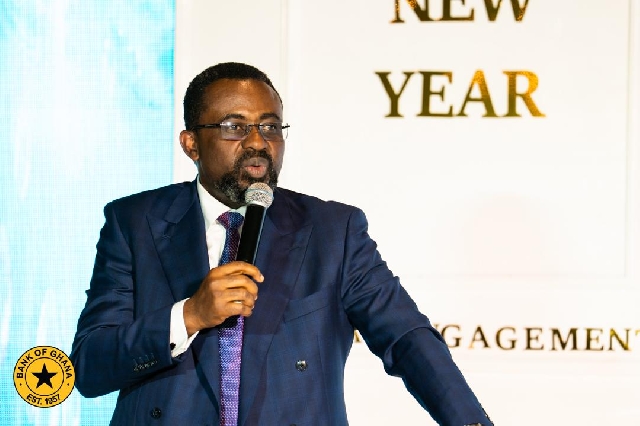 Dr Johnson Asiama, Central bank governor
Ghana’s Central Bank on Friday urged the media to play a responsible role in shaping economic expectations as the country consolidates recent gains in macroeconomic stability, while journalists appealed for stronger capacity building to improve reporting on complex financial and monetary issues.
Speaking at the Bank of Ghana’s annual media engagement in Accra, Governor Johnson Pandit Asiamah said the way economic policy decisions are explained and contextualised by the media can influence confidence, behaviour and stability across the economy.
“Monetary and financial policy decisions are complex, their effects are often indirect, and their benefits are rarely immediate,” Asiamah said, adding that inaccurate or poorly contextualised reporting during periods of adjustment could unintentionally heighten uncertainty.
“Our expectation is not compliance but responsibility, accuracy, balance and context,” he said, while pledging openness and continued engagement with journalists.
Asiamah said 2025 had been a difficult year that required disciplined policy choices as Ghana worked to restore macroeconomic order.
Inflation fell sharply to 5.4 percent in December 2025 from 23.8 percent a year earlier, supported by tight monetary policy, improved liquidity management and clearer communication, he said.
With stability largely restored, the governor said 2026 would focus on consolidation, discipline and embedding reforms rather than rapid policy shifts.
Monetary policy would remain forward-looking and anchored on price stability, while financial sector supervision would increasingly emphasise prevention, governance quality and early risk detection, he said.
The Bank of Ghana has also introduced reforms to the foreign exchange market, including a rules-based auction framework and tighter oversight, which the governor said had improved price discovery and restored confidence.
Gross international reserves rose to more than US$13.8 billion, equivalent to about 5.7 months of import cover, supported partly by the central bank’s domestic gold purchase programme.
At the same event, the President of the Ghana Journalists Association (GJA) welcomed the central bank’s commitment to engagement but called for sustained investment in building journalists’ capacity to report accurately on economic and financial issues.
He said economic reporting had become increasingly technical, especially during periods of adjustment marked by inflation control, debt restructuring and financial sector reforms.
“We cannot ask journalists to explain complex monetary and financial policies to the public without equipping them with the necessary skills and understanding,” the GJA president said. “Capacity building is essential if the media is to play its role responsibly and effectively.”
He urged the Bank of Ghana to institutionalise regular training programmes, workshops and briefings for journalists across the country, not only those based in Accra, to improve financial literacy within newsrooms.
The appeal comes as Ghana continues to navigate a sensitive recovery phase, where policy credibility and public understanding remain key to sustaining confidence among households, businesses and investors.
Mr Asiamah acknowledged the importance of strengthening collaboration with the media and said the central bank planned to expand its engagement beyond routine press briefings.
He announced plans for enhanced media training initiatives and the creation of a dedicated forum for editors, producers and other media professionals involved in economic reporting.
The central bank will also introduce a “Governor’s Economic and Financial Story of the Year” award in 2026 to encourage accurate, insightful and innovative reporting on economic issues, with the winning journalist to receive sponsorship to attend the IMF and World Bank annual meetings.
Analysts say stronger collaboration between the Central Bank and the media could help reduce Ghana's Central Bank calls for responsible reporting, as journalists urge capacity building
Ghana’s central bank on Friday urged the media to play a responsible role in shaping economic expectations as the country consolidates recent gains in macroeconomic stability, while journalists appealed for stronger capacity building to improve reporting on complex financial and monetary issues.


Trending Business

NPA CEO applauds Tema Oil Refinery for swift return to full operations
08:03
Petrol, diesel, and LPG prices expected to fall from Friday
20:17
GIPC to host investment roadshow in Central and Western regions to boost local economies
19:05
NPA CEO leads management team on working visit to Tema Oil Refinery
20:15
Kwame Pianim, Ishmeal Yamson joins Mahama's economic advisory team
15:04
Tricycle riders cry foul over high licensing fees, seek government support
19:40
Ghana’s economy grows by 3.8% in October 2025 — GSS
13:48
EXIM Bank Ghana shifts focus to economic growth and food security
11:51
Ghana Publishing Company records strong recovery, clears gazette backlogs
09:28
GRA engages taxpayers on VAT reforms, new Act implementation
07:55