

Finance Ministry directs MDAs to secure fresh commitment authorisation for 2026 spending
News
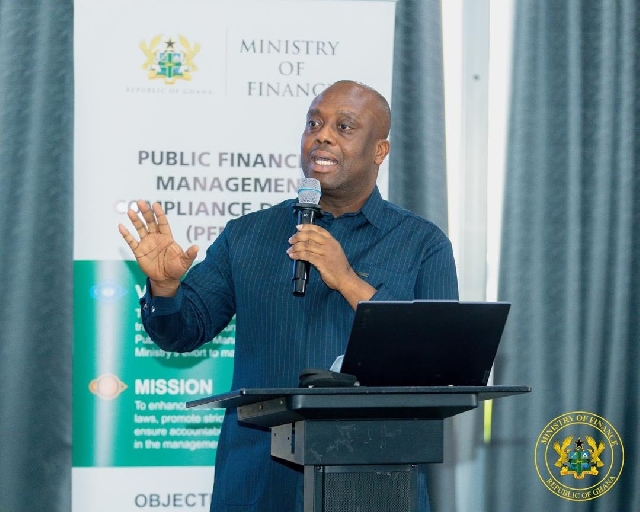 Thomas Nyarko Ampem
The Deputy Minister for Finance, Mr Thomas Nyarko Ampem, has directed all Ministries, Departments and Agencies (MDAs) to secure fresh Commitment Authorisations for any expenditure to be undertaken in 2026, stressing that authorisations issued in 2025 have expired and cannot be used for procurement activities in the new financial year.
Speaking at a meeting with Chief Directors, Heads of Covered Entities and Chief Executives of Public Institutions on the modalities for Commitment Authorisation for 2026, Mr Ampem emphasised that all spending must strictly remain within approved budgetary ceilings.
The Deputy Minister, who also represents the Asuogyaman Constituency in Parliament, announced that the Ministry of Finance has set a new two-week turnaround target for processing and approving Commitment Authorisation requests, provided that all required documentation is duly submitted.
To enhance efficiency and reduce delays, he directed that all requests should be channelled through the appropriate Sector Ministers.
However, to avoid bureaucratic bottlenecks, MDAs have also been instructed to submit copies of their applications directly to the Ministry of Finance, which will begin processing while awaiting formal sectoral referrals.
Mr Ampem further explained that MDAs with ongoing projects from 2025—where contracts have already been awarded but payments remain outstanding—must fully disclose such commitments.
He noted that these obligations will be treated as a first charge on their 2026 budgets before approval is granted for any new expenditure.
Outlining the purpose of the Commitment Authorisation system, the Deputy Minister said it was introduced to prevent public institutions from committing the state to projects without approved budgetary allocations.
He observed that in the past, significant financial commitments were undertaken without the knowledge of the Ministry of Finance, a practice that contributed to the country’s growing public debt.
He stressed that strict enforcement of the system is essential to curbing unauthorised spending and forms part of a mandatory framework aimed at restoring fiscal discipline and ensuring debt sustainability under Ghana’s IMF-supported programme.
“If this country had respected the budget and committed the state only when funds were available, we would not have found ourselves where we are today,” Mr Ampem remarked.
Source: Classfmonline.com/Cecil Mensah


Trending News

Patrick Boamah urges Bank of Ghana to halt continuous dollar interventions
09:44
Ghana Medical Trust Fund supports UGMC patient with GHS25,750 during pilot phase
13:24
Senegal FA backs coach after AFCON final stoppage
17:08
Majority dismisses Minority claims, recalls economic hardship under erstwhile Akufo-Addo gov’t
03:37
Ghana deploys 121 nurses to Antigua to expand international job opportunities for health professionals
10:26
NPP risks further decline without a leader like 'General Mosquito' – Osei Owusu
05:55
AMA draws red lines as decongestion exercise begins February 1
08:06
Finance Ministry directs MDAs to secure fresh commitment authorisation for 2026 spending
19:05
Ghana Cyber Security Authority issues alert on banking malware
09:35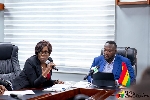
Grant Management Committee for Adwumawura Programme inaugurated
14:19
