

Senegal FA backs coach after AFCON final stoppage
News
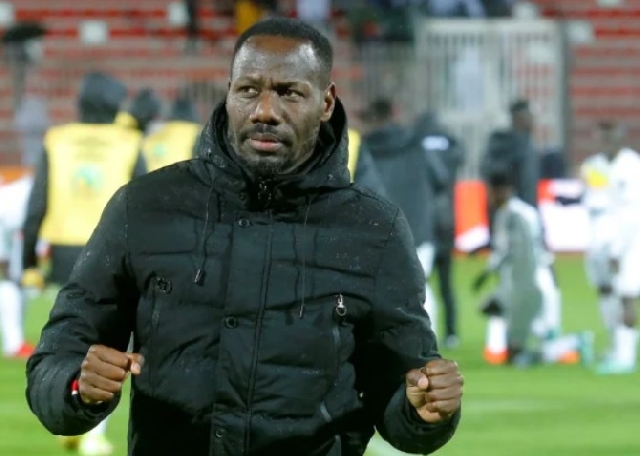 Senegal head coach Pape Thiaw
The Senegal Football Federation (FSF) has publicly defended head coach Pape Thiaw following his decision to momentarily withdraw players from the pitch during the Africa Cup of Nations (AFCON) final against host nation Morocco, insisting the move was necessary to safeguard the team’s welfare and dignity.
In a 13-minute statement shared on X, FSF President Abdoulaye Fall said the action taken during the final was not spontaneous, but the culmination of what he described as a series of troubling experiences faced by the Senegalese delegation throughout the tournament.
According to Fall, Senegal’s resistance disrupted what he believes was an assumed path to victory for the hosts.
“Morocco never expected any team to stand in their way,” he said, adding that no nation had challenged the host country as firmly as Senegal.
Addressing the brief stoppage during the final, Fall made it clear that the federation fully endorses Thiaw’s judgment, stressing that there was never an intention to abandon the match.
“We stand firmly behind Pape Thiaw, and even higher authorities support him. There are aspects of this matter we will not disclose publicly,” he stated.
Fall explained that Senegal’s officials later agreed internally to resume play to avoid the risk of forfeiture.
“After internal consultations, I instructed Ablaye that we should return to the pitch and request the continuation of the match so it would not be classified as abandonment,” he said, noting that play had already resumed by the time they returned.
The FSF president also revealed that Senegal encountered difficulties even before travelling to Rabat, including delays in receiving basic logistical details.
“After qualification, we sent a representative ahead to gather information,” Fall said. “We asked about accommodation arrangements, but no answers were provided until the very last moment.”
He said the hotel eventually assigned to the team immediately raised red flags.
“Our coordinator told me clearly that the location was unsuitable—right in the city, noisy, and not appropriate for a team competing at this level,” Fall recalled.
Training plans became another source of disagreement, particularly a proposal that Senegal prepare at Morocco’s Mohammed VI Football Complex.
“They wanted us to train at their base camp,” Fall said. “It is a modern facility, but everything would be exposed. That was unacceptable.”
Fall said the situation deteriorated further upon the team’s arrival in Rabat, citing a complete lack of security presence.
“When the team arrived, there was no supervision whatsoever,” he said, adding that he personally escalated the issue to CAF leadership.
Despite initial engagements with CAF officials, Fall said his concerns were repeatedly deflected.
“Every response pointed elsewhere—either CAF or Morocco,” he said. “That was when I realised I was being misled.”
Senegal subsequently prepared a public statement, a move that prompted an urgent response in the early hours of the morning.
“At 1:30 a.m., Faouzi called me to ask what was happening,” Fall said. “I told him clearly that we would not play under those conditions and that we were preparing to address the media.”
According to Fall, CAF reacted swiftly afterwards, with security measures immediately strengthened around the team’s hotel.
“Checkpoints were established kilometres away,” he said. “I also insisted that we would not train at the Mohammed VI Complex.”
Fall said he was allowed to select an alternative training venue, with the annex pitch of Moulay Abdellah Stadium eventually approved through an official CAF notice.
He also disclosed issues surrounding ticket allocations, claiming Senegal initially received only three tickets for its entire delegation.
“I told him it was unacceptable for a finalist to receive just three tickets, especially when all others had been taken,” Fall said.
CAF later intervened by reallocating seats across VIP and Royal sections, he added.
However, Fall identified the appointment of the match referee as the most unresolved concern.
“Two days before the final, we still did not know who would officiate the match,” he said. “We were told it was to protect the referee, but by then, we knew no formal requisition was possible.”
He confirmed that Senegal had already prepared a formal objection during the final.
“While the match was ongoing, we submitted a letter of protest and remained alert throughout,” he said.
Fall insisted that Senegal’s actions were driven by leadership and foresight rather than confrontation.
“No country has confronted Morocco in this way,” he said. “They wield influence, resources, and power within CAF, and many nations are unwilling to challenge that.”
Despite his personal ties with CAF officials, Fall said certain principles were non-negotiable.
“Faouzi is a friend, but there are limits to what we will accept,” he stressed.
Reflecting on the tournament, Fall suggested that several teams may have been affected by similar conditions.
“Some teams performed well but were undone by the environment,” he said. “As for Senegal, we anticipated these challenges. Beyond the football, we demonstrated strong leadership.”
Source: Classfmonline.com


Trending News

Ghanaian engineering contingent praised for relief efforts in post-hurricane Jamaica
15:28
Afenyo-Markin accuses NDC of hypocrisy over stalled anti-LGBTQ bill
02:19
New Ghana card fees announced: Registration at GH¢30, Replacement at GH¢200
08:37
Ketu North MP pays a working visit to NYA
05:30
High Court dismisses Randy Abbey’s GHS20 million defamation suit against Abronye
20:50
Asantehene engages top business leaders to boost private sector–led development
02:32
NDC issues guidelines for Ayawaso East parliamentary primary
10:39
UG unveils refurbished Walls of Honour
15:14
V/R: Sonrise Christian High School partners EcoFlow Solutions to lead 'green school' revolution in Ho
00:32
Registrar of Companies to implement new service fees from February 2, 2026
08:30