

UNFP report: Financial hardship delaying marriage and parenthood among young Ghanaians
News
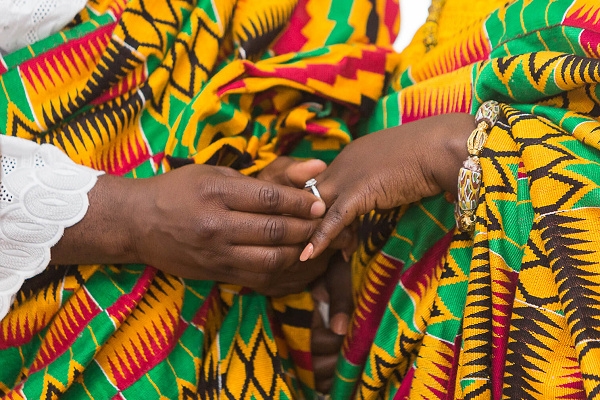 Couple at a traditional wedding
Young adults in Ghana and across the globe still overwhelmingly desire marriage and children, but they are increasingly delaying these milestones due to financial insecurity and a lack of stable employment.
The findings were highlighted as part of World Population Day on Saturday, 11 July 2026. Established by the United Nations in 1989, the annual event focuses global attention on population issues, reproductive health, education, and employment. This year’s theme, "Realising the hopes and aspirations of young people, today and for the future," focuses directly on the family and livelihood priorities of young adults.
The theme draws from a new report by the United Nations Population Fund (UNFPA) titled Lives, Choices and Futures. Based on a Demographic Futures Survey of more than 108,000 young adults across 73 countries, the report challenges the narrative that the younger generation is turning away from family life.
According to the survey, more than two-thirds of respondents aged 18 to 39 want to get married, and only about one in ten say they do not want children. However, the vast majority face severe economic barriers: 88 per cent cited financial security and 87 per cent identified stable employment as essential preconditions for parenthood.
"The findings are striking: most young people aspire to partnership and parenthood," said UNFPA Executive Director Diene Keita at the report's launch in New York. She added that when financial barriers are lowered, young people are better positioned to make the choices that are right for them.
The survey mainly reflects the views of internet-connected young adults and is not nationally representative. Nevertheless, the authors noted that 80 per cent of respondents chose "the joy children bring" as a primary reason for wanting a family, whilst government incentives ranked among the lowest motivators.
The Ghanaian Context
In Ghana, where more than half of the 33 million population is under the age of 25, the economic barriers to starting a family are particularly acute. Demographers have pointed out that a youth-heavy population can yield a "demographic dividend" — rapid economic growth driven by a large working-age population. However, this dividend is only possible if the younger generation has adequate access to health services, quality education, and jobs.
Ghana's national data continues to reflect gaps in reproductive healthcare access. According to the 2022 Ghana Demographic and Health Survey, 27.8 per cent of married women use a modern contraceptive method, and 23.4 per cent have an unmet need for family planning. The total demand for family planning stands at 59.7 per cent, with just over 60 per cent of that demand currently being met.
The country's total fertility rate was 3.9 children per woman in 2022, representing a flat trend since 2017 after a steep historical decline from 6.4 in 1988. Meanwhile, Ghana’s maternal mortality ratio is estimated at 253 to 263 deaths per 100,000 live births as of 2020. Whilst this is a significant drop from nearly 500 deaths per 100,000 in 2000, it remains well above the Sustainable Development Goal target of 70 by 2030.
Reproductive Health Services Under Strain
Local healthcare providers report ongoing demand for services. MSI Reproductive Choices Ghana, which operates eight clinics across Accra, Kumasi, and Takoradi alongside public-sector partnerships, reported high engagement from youth in the first half of this year.
According to its self-reported, unaudited programme data for January to June 2026, the organisation recorded 107,184 total client visits. Of those visits, 37,663 were by young people aged 15 to 24, accounting for 35 per cent of the total.
Within the youth bracket, adolescents aged 15 to 19 made up 7,058 visits (19 per cent of youth visits), while young adults aged 20 to 24 accounted for 29,726 visits (81 per cent of youth visits). Additionally, the programme provided 97,799 couple years of protection and administered 81,225 long-acting reversible contraceptive methods, such as IUDs and implants.
The UNFPA has stated that a more comprehensive analysis of the Demographic Futures Survey, including specific policy recommendations, will be published in its upcoming State of World Population 2026 report.
Source: classfmonline.com


Trending News
Vice President urges greater support for women in security services
18:42
Vice President Naana Jane Opoku-Agyemang visits Interior, Environment Ministries
12:14
EPA orders closure of Dukes fuel station at Kasoa over choked drains
16:54
Planting for Food and Jobs vehicles ‘sold off’ before 2024, leaving extension officers stranded – Eric Opoku
16:24
Agenda 111 projects: Government focuses on 35 facilities
18:21
29 killed, 6 unaccounted for in nationwide floods – Interior Minister
20:27
Without security, development cannot thrive – Vice President
18:41
Wusuta Traditional Leaders raise concerns over Hosuta–Vakpo road construction
12:09
Central Regional Coordinating Council, Cape Coast Assembly undertake clean-up exercise after floods
20:39
LaDMA support flood victims with relief items
16:19