
G4O has cut BDCs' dollar demand, helped BoG's cashflow, kept cedi, ex-pump prices stable – Addison says $907m worth of gold purchased
News
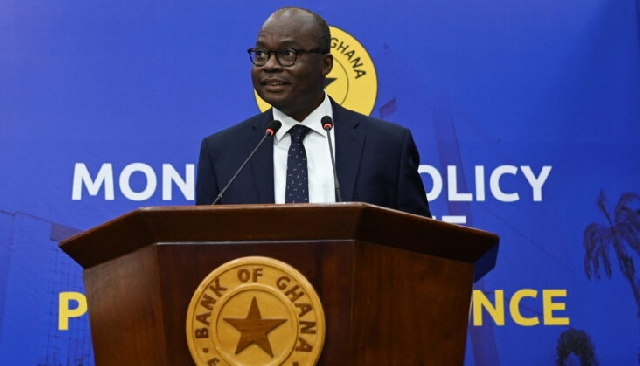 Governor of the Bank of Ghana (BoG), Dr Ernest Addison
The direction of recent macroeconomic indicators has given some positive signals of a gradual turnaround in the economy, Bank of Ghana Governor Ernest Addison has said.
He said this follows the implementation of "sound" macroeconomic policies, the "successful" completion of the domestic debt restructuring, and a wide range of structural reforms.
Speaking at the Chartered Institute of Bankers' Governor's Day, Dr Addison said: "Indications are that sustained policy efforts are needed to firm up the emerging stability and growth".
One of such policy efforts is the central bank’s Domestic Gold Purchase Programme (DGPP), which was launched in June 2021.
He explained that with the DGPP, the central bank started converting a domestic asset into a foreign asset through the purchase of locally-produced gold in local currency and converting same into monetary gold.
The objective, Dr Addison mentioned, is "to rebuild reserves, stabilise the foreign exchange market, and in turn, support the disinflation process." "The first leg of DGPP is the Gold for Reserves (G4R) transactions initiated by the central bank to augment foreign reserves with a view to double gold holdings in the foreign exchange reserves within five years", he said, adding: "Since its inception, the Bank has purchased 17.89 tons of gold, equivalent to US$1.14 billion, which has more than doubled the level of the central bank’s gold reserves, well ahead of the initial target."
Apart from the reserve buildup, Dr Addison said the Gold for Oil (G4O) programme, another leg of the DGPP, has also helped to "reduce the demand for US dollars by the Bulk Oil Distribution Companies (BDCs), who would otherwise have sourced forex from the market for the importation of petroleum products".
"So far, a total of 14.23 tons (US$907 million) of gold has been purchased for barter payments for importation of petroleum product", he reported. He said the G4O programme has also "impacted the central bank’s cashflow, helped maintain stable ex-pump prices, fostered market confidence, and supported the local currency".
In addition to the improvements in the macroeconomic environment and the performance of the banking sector, Dr Addison said the central bank has also worked to strengthen the regulatory and supervisory frameworks "to improve overall resilience of the financial system".
"Furthermore, the ongoing work of the Ghana Deposit Protection Corporation and the Financial Stability Council will help to further strengthen the resilience of the banking sector and the protection of deposits", he added.
Source: classfmonline.com


Trending News
Ghana’s Presidential Envoys champion reparations at CARICOM Summit in St. Kitts and Nevis
10:44
Embassy of Ghana, Doha urges nationals in Qatar to register amid rising regional tensions
18:16
'More than a month's worth': NPA assures public of adequate fuel stocks despite Middle East tensions
02:45
Ghana pushes MICE ambition at Meetings Africa in Johannesburg
16:10
Institute of Statistical, Social and Economic Research study says better waste investment could earn Ghana ₵47.9b annually
00:42
Ato Forson hasn’t deposited not even a Cedi into the Sinking Fund – Annoh-Dompreh rebukes
12:08
Ghanaian tomato trade resumes amid Sahel security risks, driven by rising domestic prices
20:32
Ghana Police deploys tight security for Ayawaso East by-election tomorrow
18:14
Baba Sadiq appointed High Commissioner to Nigeria
02:56
Victor Kofi Owusu stands firm amid family dispute over Daddy Lumba’s legacy
14:00
