
Refusing 1 pesewa, 20 pesewa or any cedi coin is illegal, Offenders risk jail or fine - BoG warns
Business
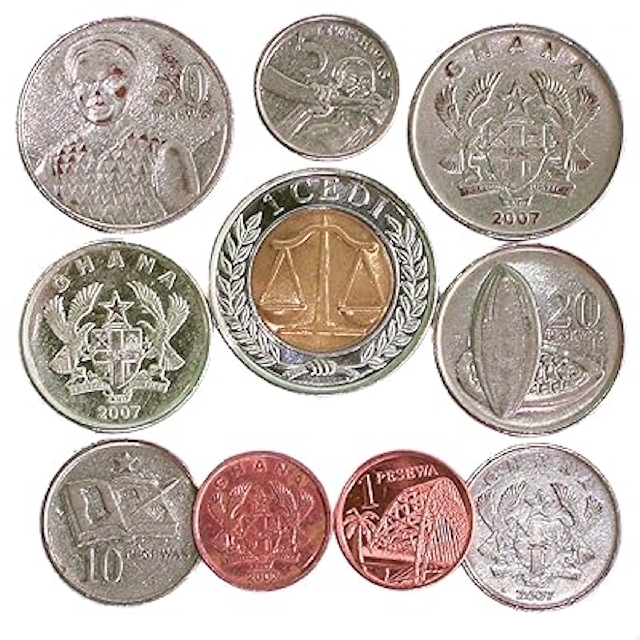 Cedi coins (pesewas)
The Bank of Ghana has cautioned traders, transport operators, and businesses against the persistent refusal to accept Ghana cedi coins and notes, warning that such actions constitute a criminal offence punishable by law.
In a public notice signed by the Secretary of the bank, Aimee Vyda Quashie, and issued on Tuesday, July 22, 2026, the Central Bank expressed concern over the “widespread and persistent refusal” by some business entities to accept 1 pesewa, 5 pesewa, 10 pesewa, 20 pesewa and 50 pesewa coins as well as the GH₵1 and GH₵2 coins in payment for goods and services.
The notice, No. BG/GOV/SEC/2026/23, follows an earlier BoG directive on July 14, 2026 on the misuse and defacement of currency.
This new directive addresses what the Bank describes as an “equally serious matter”—the unlawful refusal to accept legal tender.
The bank reminded the public that all coins issued by the Bank of Ghana remain lawful currency of the Republic and must be accepted in accordance with the Bank of Ghana Act, 2002 (Act 612) and the Currency Act, 1964 (Act 242).
According to the notice, “no trader, transport operator, business entity, or individual has the discretion to unilaterally refuse to accept these coins...on grounds of inconvenience, low value, or personal preference.”
The BoG clarified that the coins have not been demonetised or withdrawn from circulation and remain valid for the settlement of debts and transactions throughout Ghana.
The Bank stated that refusing to sell to a buyer simply because payment is being made with coins or notes is an offence under the Currency Act, 1964.
Persons convicted face imprisonment for a term not exceeding three years or a fine or both imprisonment and a fine.
The notice further indicated that business owners who instruct staff to reject coins will be treated as having committed the offence themselves and that a person found committing the offence may be arrested without a warrant.
For enforcement, the Bank of Ghana said it will work closely with the Ghana Police Service and other law enforcement agencies to ensure compliance.
Members of the public who encounter difficulties have been encouraged to report such instances to the nearest Bank of Ghana office, the Ghana Police Service or through the bank’s official communication channels.


Trending Business
1 pesewa, 20 pesewa or any cedi coin is Ghana money; Don’t reject it - BoG warns traders
13:11
Refusing 1 pesewa, 20 pesewa or any cedi coin is illegal, Offenders risk jail or fine - BoG warns
13:09
President Mahama signs Ghana Investment Promotion Authority Act into law
12:59
NLA, Fidelity Bank to launch modernised POS terminals, raises instant win cap
15:54
Bank of Ghana releases latest FX rates: Ghana cedi starts the week steady against major currencies
11:41
Ghana secures lifting of Burkina Faso restrictions on egg exports, tomato imports
11:53
Kumasi Central Market traders threaten demonstration over stalled Phase Two project
11:28
pladis Mcvities executive praises Ghana as one of the best places for business in Sub-Saharan Africa
18:55
Menzgold customers renew appeal to Mahama over locked-up funds, issue 21-day ultimatum
02:22
Fuel prices rise as Oil Marketing Companies announce new pump rates
12:10